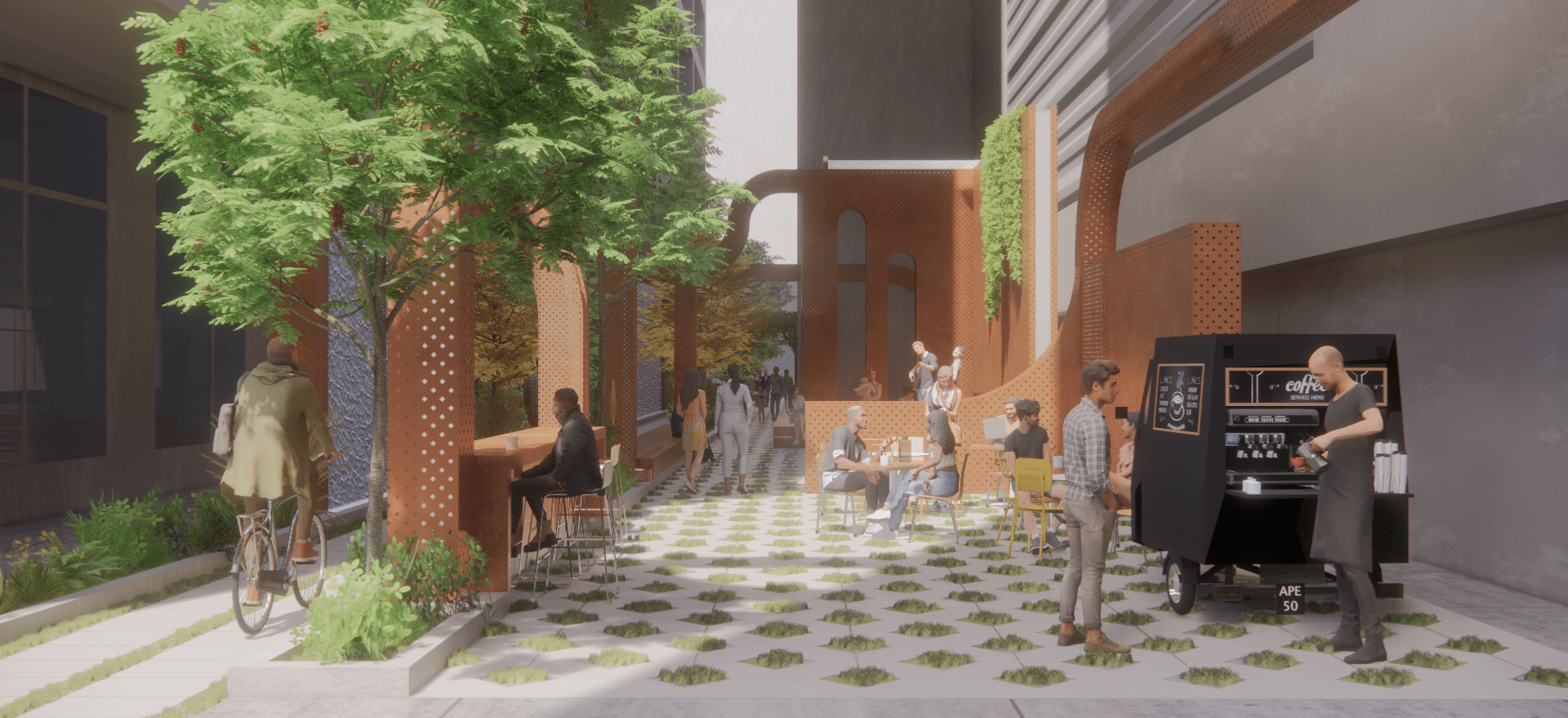
Humans have a primitive need for awe. Spaces for spirituality, storytelling, transcendence, and meditation predate even the earliest known villages (i.e., Gobekli Tepe). The human species’ ability to imagine the unknown was even the reason we started cooperating as a collective some 70,000 years ago and advanced past any other species. However, due to Westernization and later the Industrial Revolution, humans advanced too quickly and lost the prioritization of finding awe in their daily lives. In the modern capitalist system, human lives are often seen as instruments for profit rather than as sacred. Our instinctual and critical need for connection – connection with ourselves, each other, and the numinous – has been forgotten.
Today, common spaces dedicated to this lost part of us are religious spaces, natural landscapes, or private homes. However, many people don’t have access these spaces in busy, urban cities within the U.S. due to the lack of public natural park space and maintenance, lack of accessible transit to nature, discrimination inside some religious institutions, or lack of affordable private housing. Many don’t even think they have earned the right to dedicate their time to awe in the first place.
What would a public space look like that allowed the average working human to find awe in their daily life again? How can we use architecture to remind ourselves that slowing down, connecting, and finding joy everyday is not a luxury for those who can afford it but is entitled to every single human, no matter how “busy” we are? The average working human cannot access or control the developments of private spaces within cities, but what about the space in between the private spaces? What about the forgotten cracks of the city? These can be transformed from ignored interstitial areas into celebratory reminders of this innate need for connection to the unknown. These lost spaces can become our gaskets of awe.
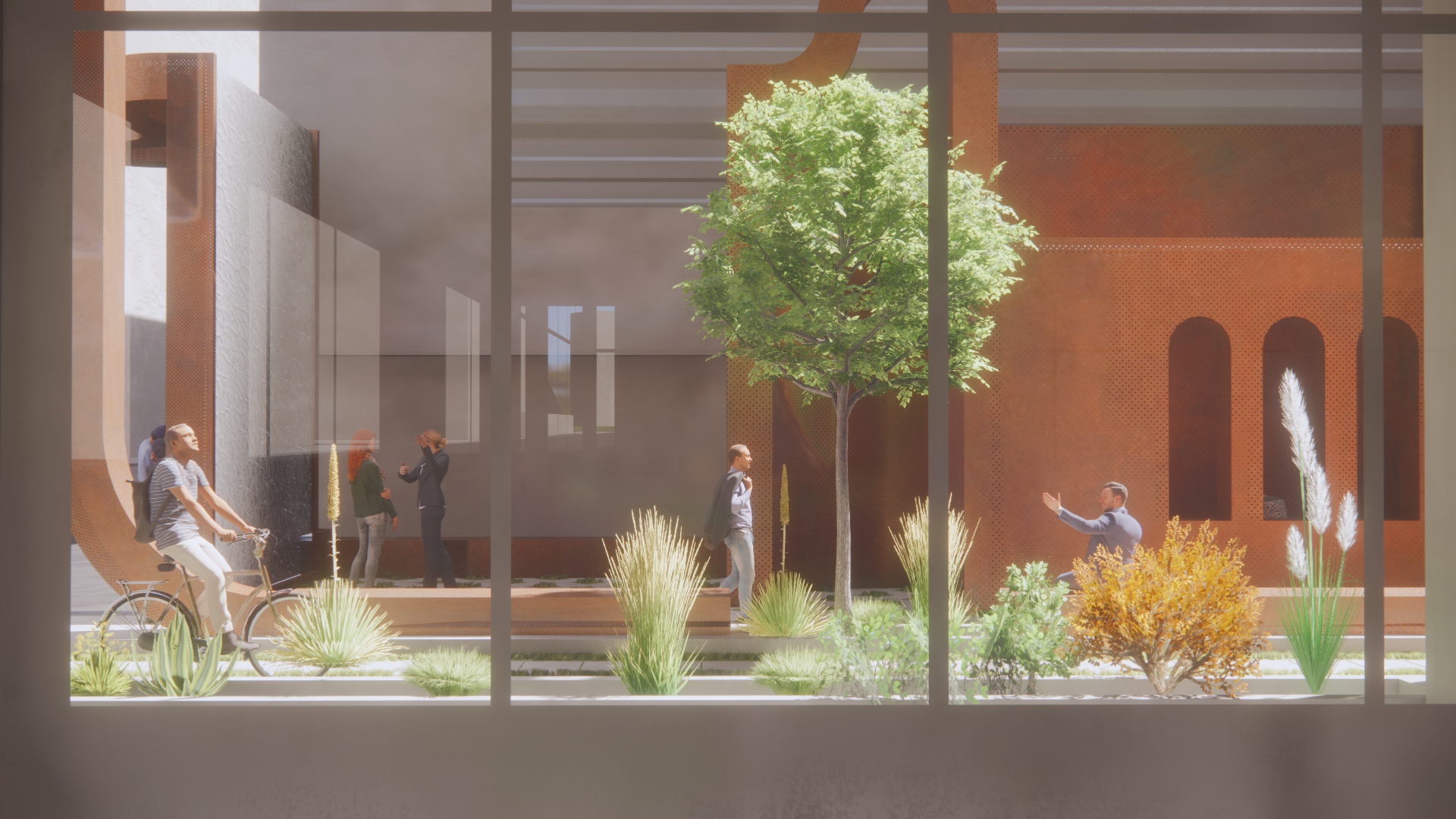
This thesis proposes a kit of lightweight framings that can be installed in various sequences within urban alleyways, creating intimate and accessible public greenspaces. The sensory attributes necessary for these parks include water features, noise cancellers, resiliency strategies, and design attributes that are inviting and calming. Houston, Texas, was chosen as the site for exploration due to its need for more pedestrian friendliness and developmental regulation for its urban public spaces.
1. Research
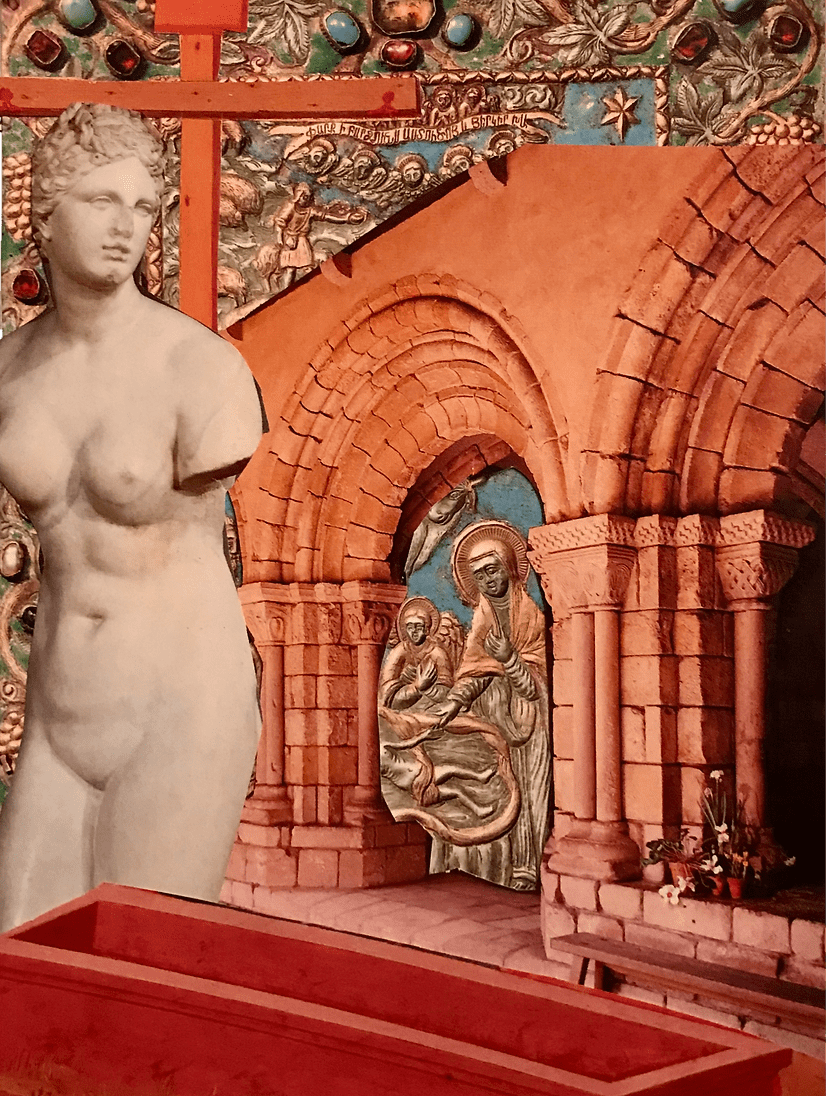
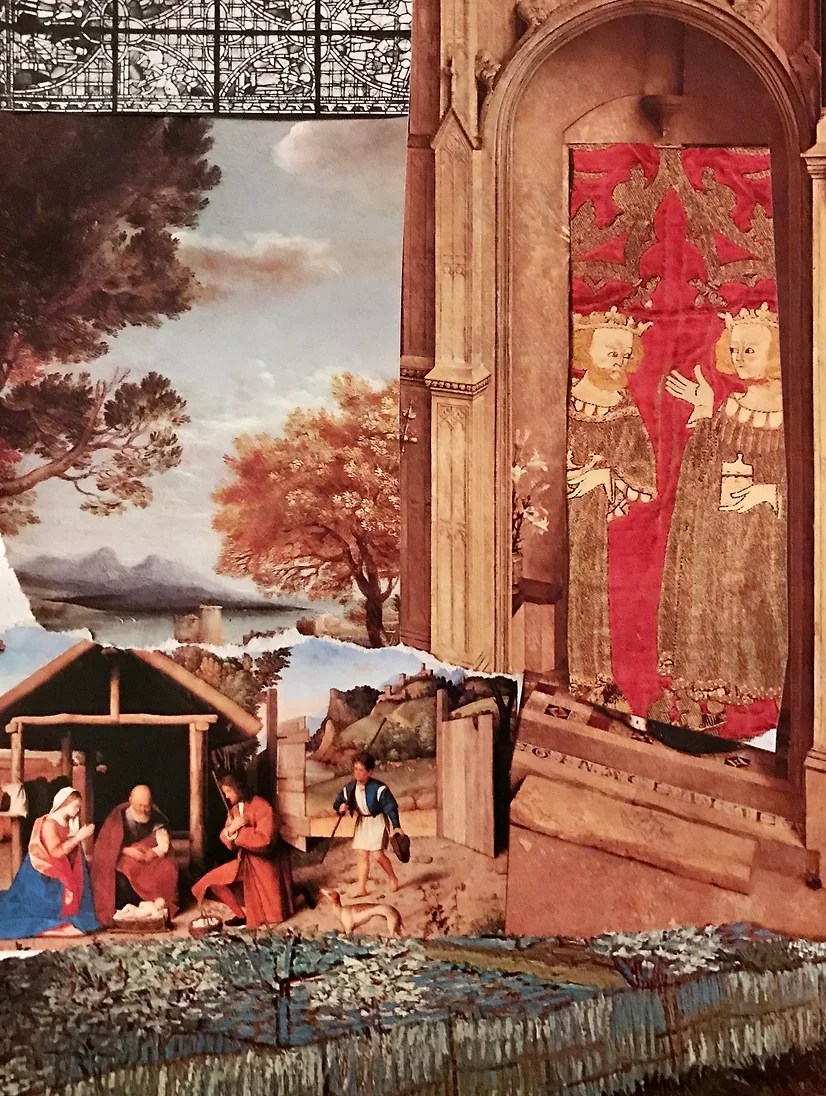
Beginning Collages
Two collages completed within the first week of studying sacred spaces and places for transcendence.
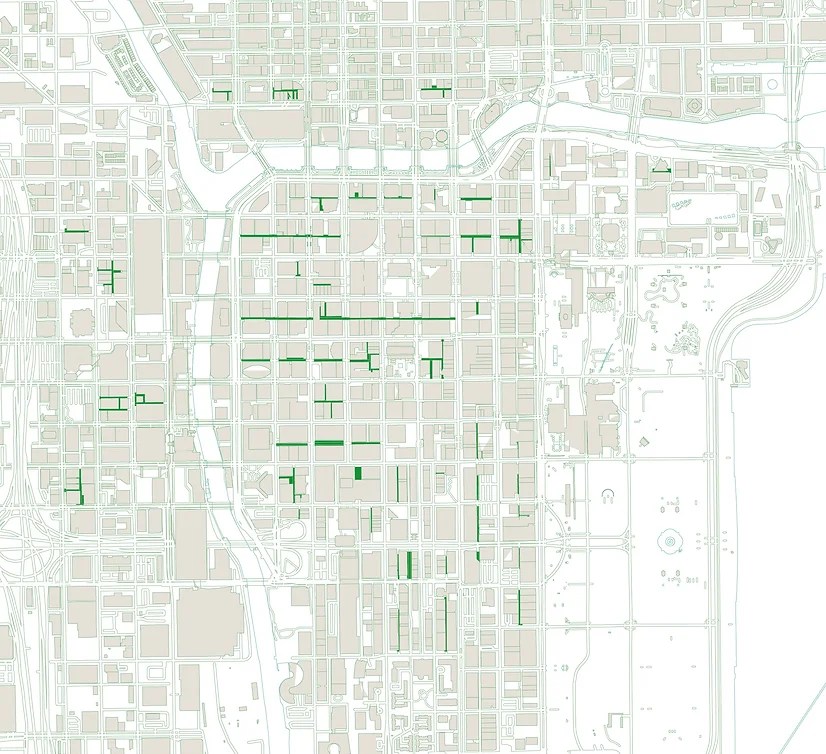
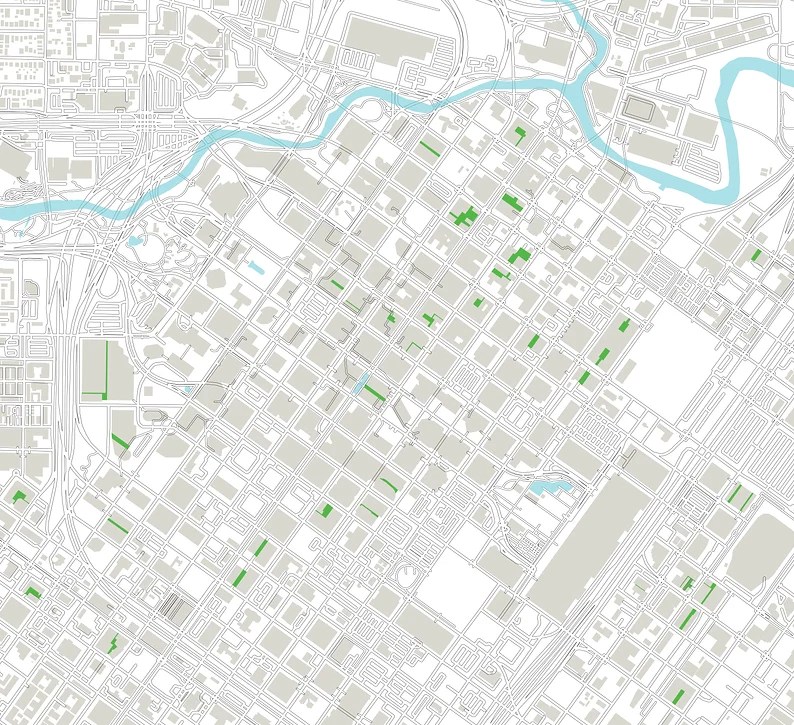
Interstitial Space Mapping
Site maps highlighting the interstitial spaces (shown in green) within Chicago (left) and Houston (right), two of the most productive and busy cities in the United States. Houston would be later chosen as the site for intervention due to its historical pedestrian unfriendliness and lack of developmental empathy.
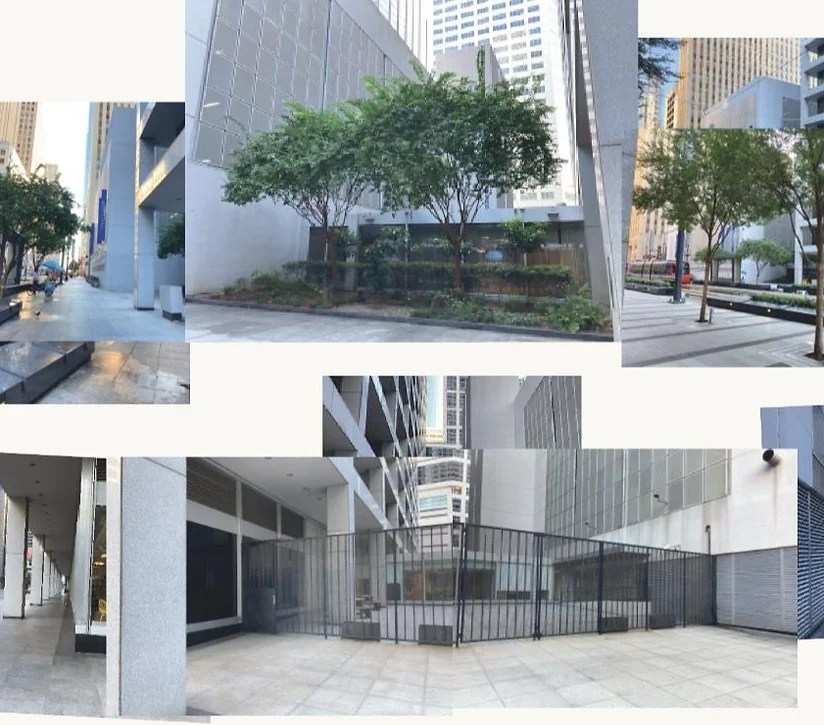
Alleyway Site Collages & Activity Diagram
Joiner collages of the chosen site for the exploration in Houston. Top collage is on Main St. (west) and bottom collage is on Fannin St (east).
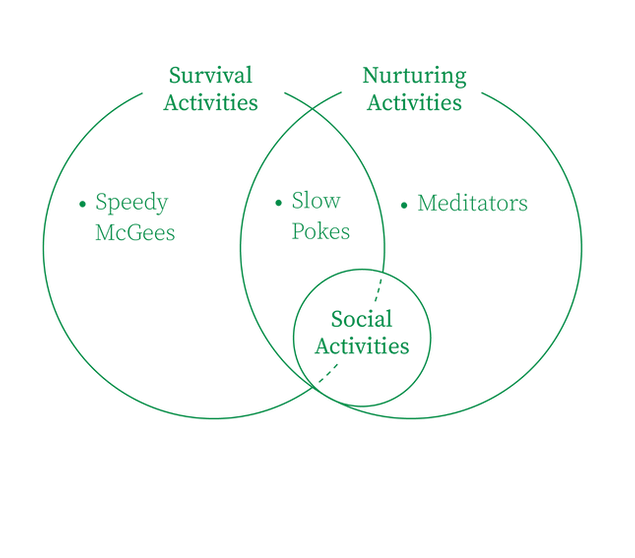
A venn diagram that maps the motivations behind the people who use urban interstitial spaces and their actions.
Character Study
From field examination, there are three apparent groups of people that often use interstitial spaces:
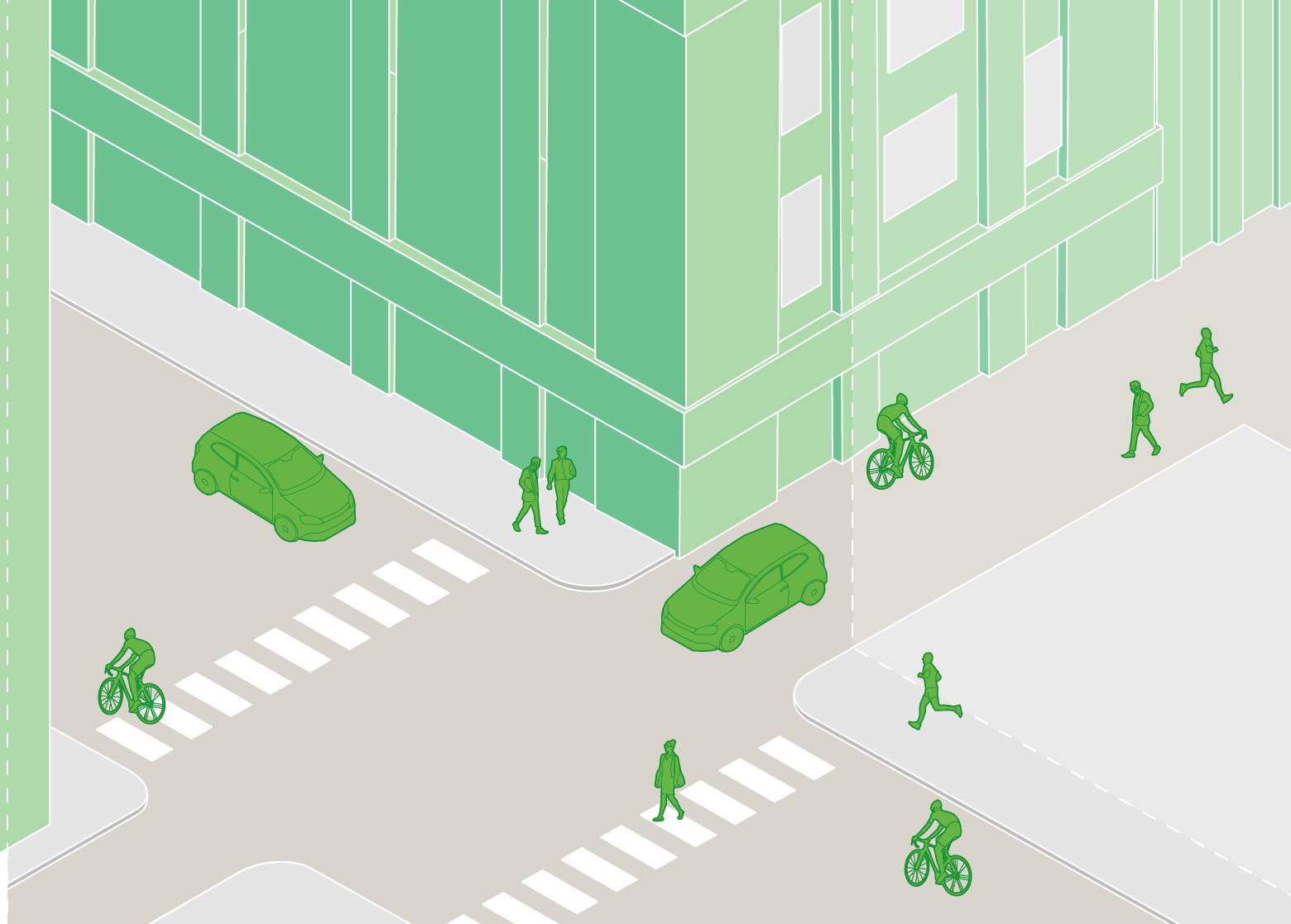
Speedy McGees: People who are trying to get from A to B as quickly as possible by biking, quickly walking, running, or driving. They often use interstitial spaces as shortcuts.
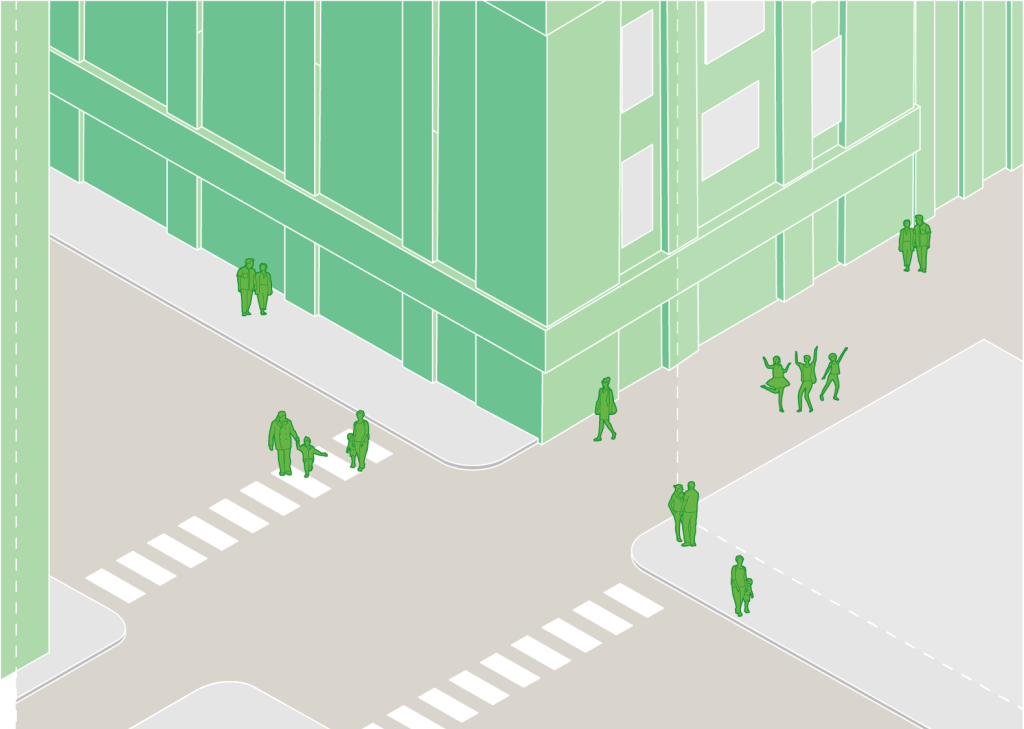
Slow Pokes: Folks who are also wanting to get from A to B, but not as quickly. They tend to wander and take intermittent walks. They find the curiosity of interstitial spaces inspiring.
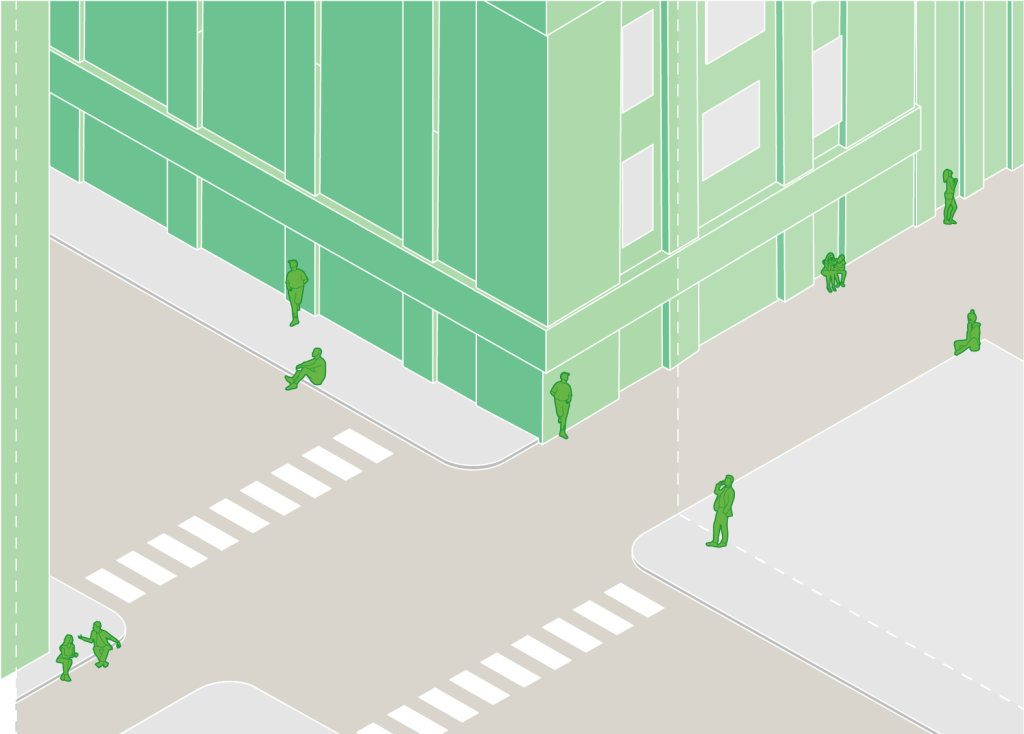
Meditators: People who utilize their need for transcendence. The privacy, quietness, and accessibility of interstitial spaces gives them an intimacy with their self or with others.
Desired Design Features:
- Sound Buffers (for silence)
- Seating (for slowness)
- Natural Light (for nourishment)
- Water Elements (for noise)
- Trees / Vegetation (for shade, cooling, and noise)
- Canopies (for when it’s raining)
- Bioswales / Flow-Through Planters (for resilience)
- Permeable Pavement (for resilience)
- High Walls (for privacy and silence)
- Transparent Material (for visibility)
- Same Plane (for accessibility)
- Food & Beverage Program (for human noise)
Desired Sensations:
A. Transcendent
B. Accessible
C. Silent (w/ white noise)
D. Resilient
E. Non-Monumental / Safe
F. Controllable
G. Communal
H. Atelic / Serendipitous
2. Design Charrettes
Concept Artifact
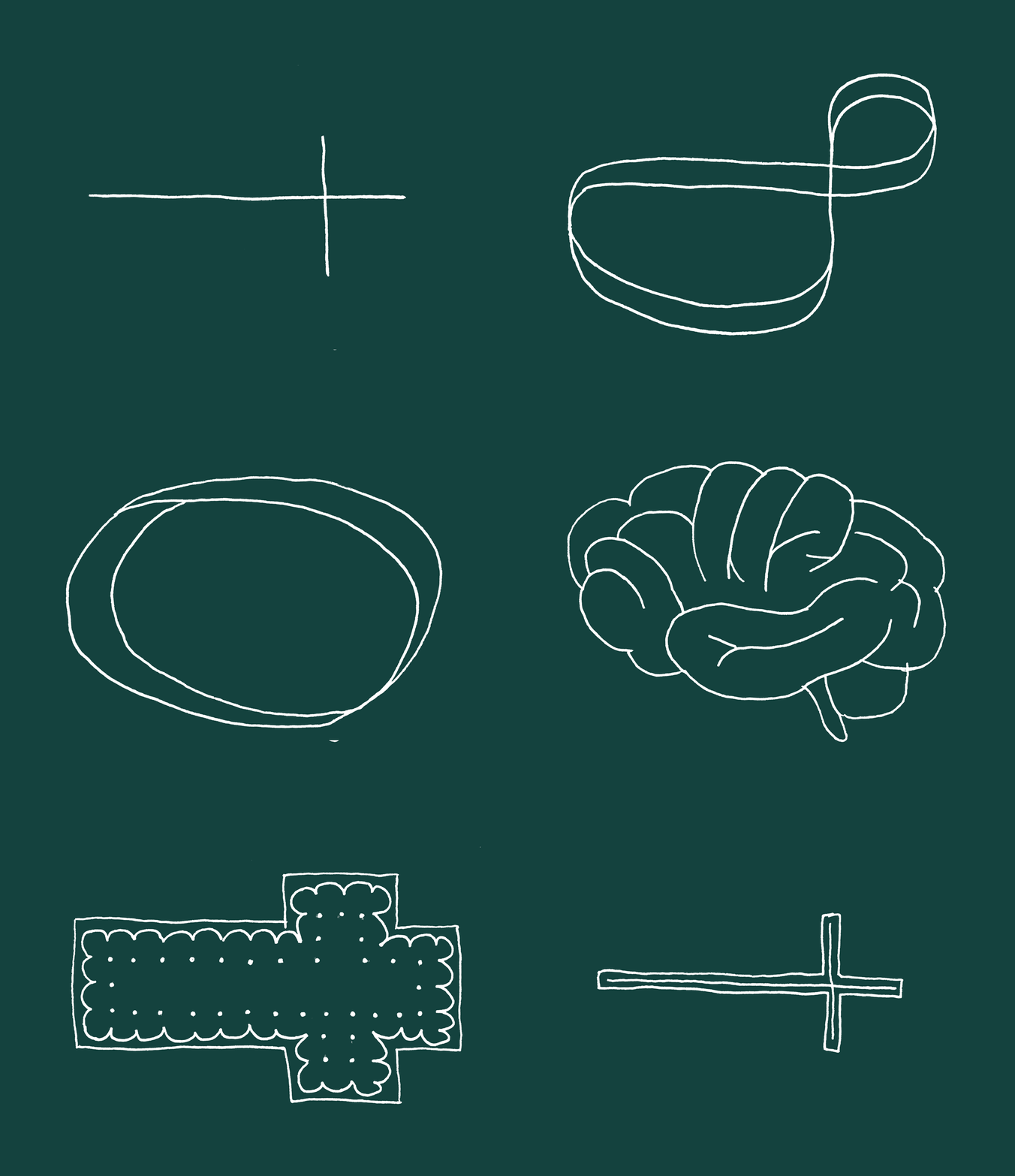
The Moebius strip is a one sided curved surface. The philosopher Maurice Merleau-Ponty once described the Moebius strip as a representation of how the physical and the metaphysical are interdependent of each other, not antonyms. This idea inspired this graphic, called “Nooks and Crannies,” which symbolizes the chiasmic bond between both the physical and mental, the designated and poché. Physical space (symbolized with the early Renaissance church plan) is interconnected to mental space (symbolized with a human brain). The connection between the two is represented by a one sided surface, or a Moebius strip.
Abstract Artifact
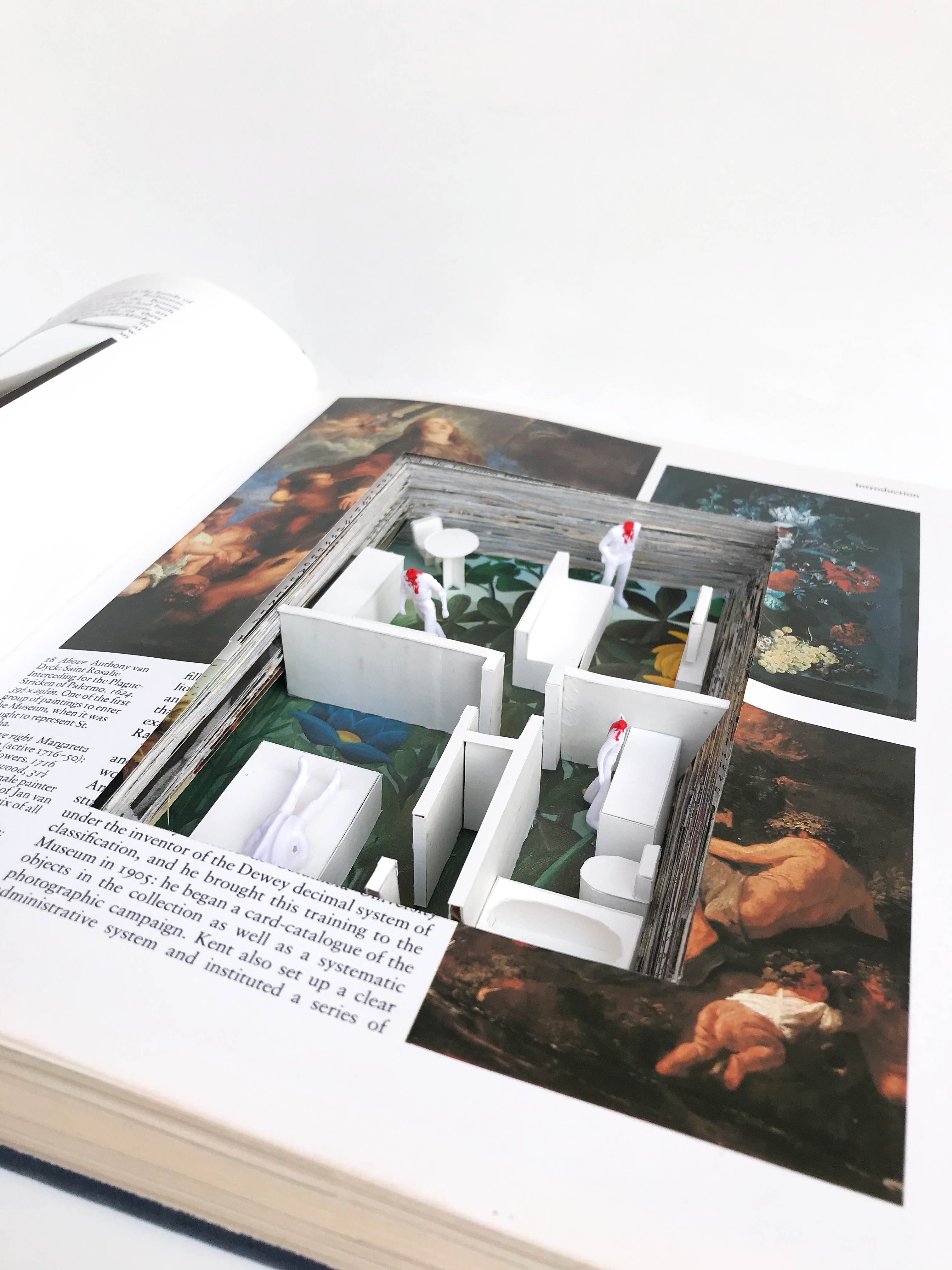
In an initial attempt to abstractionally symbolize the change in Western architectural epistemology from metaphysicality and intangibility to physicality and empiricism, this artifact was created. A book has been cut open in order to fit a three-dimensional, functional floor plan of a typical single home. However, everyone’s heads have been cut off. The use of the architecture without the head represents how modern architecture is only used as a function for our bodies and not our minds.
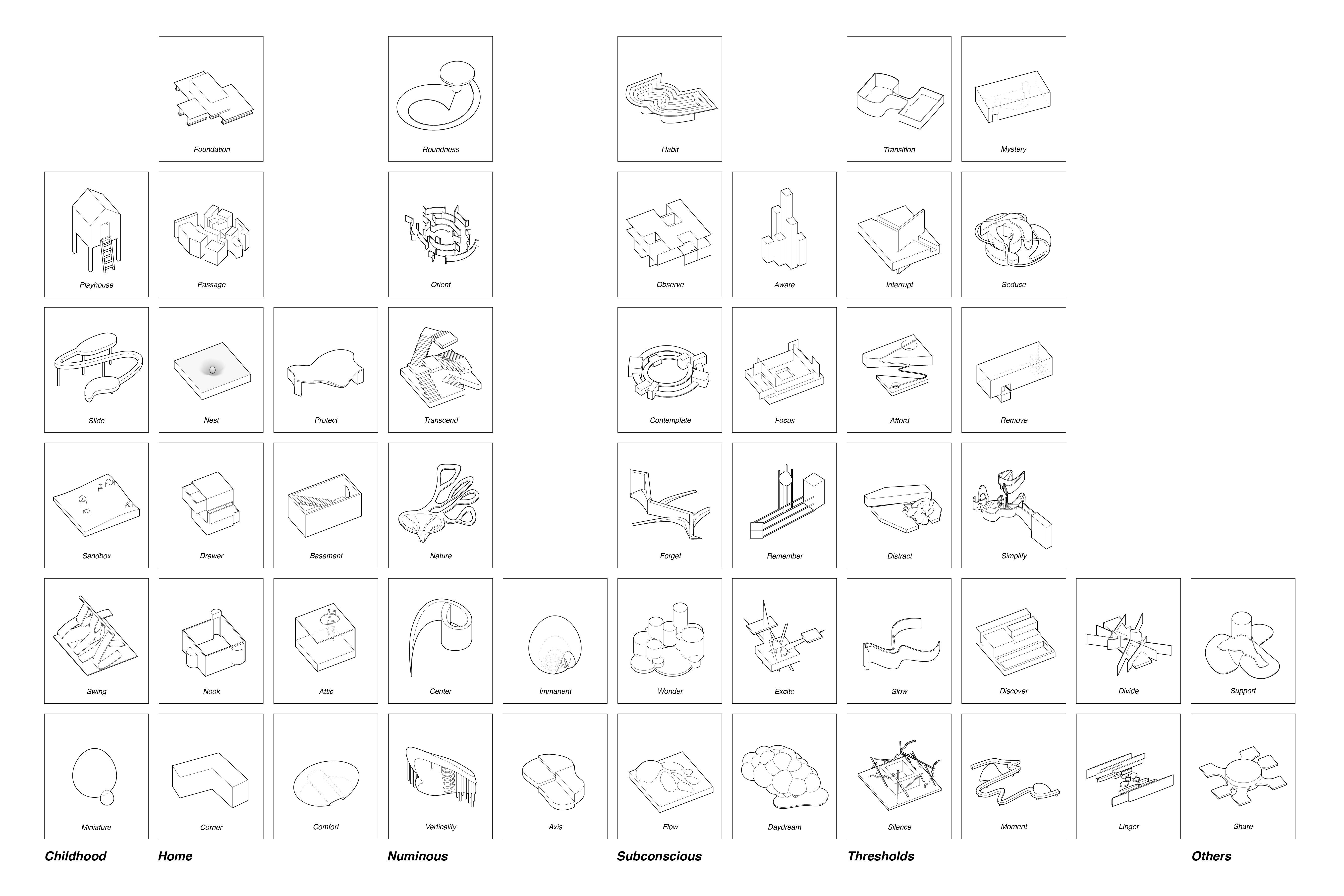
Formal Intuitions
A series of 100 diagrams that are based on intuitive words that are derived from the desired sensations and features of the space.
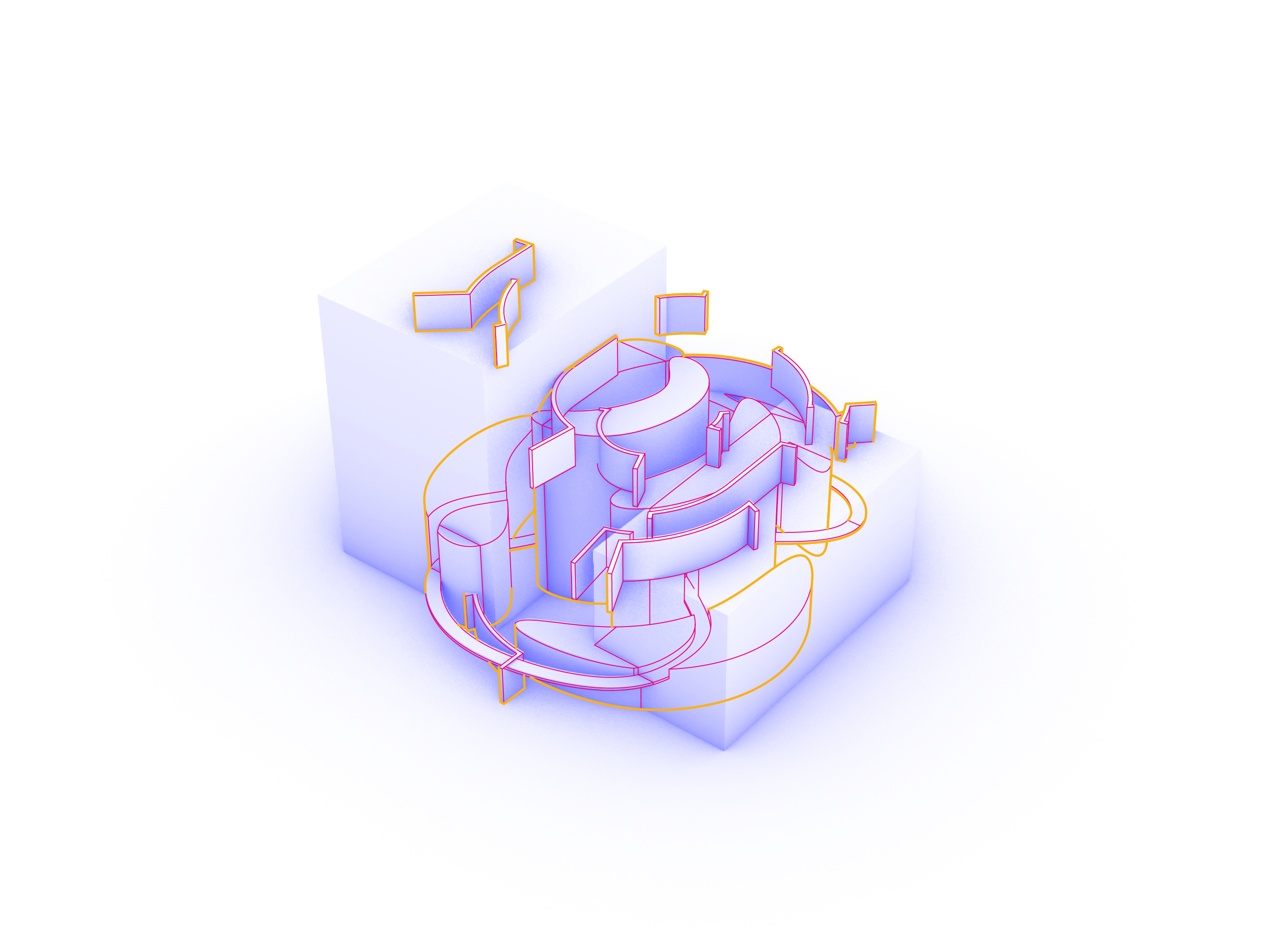
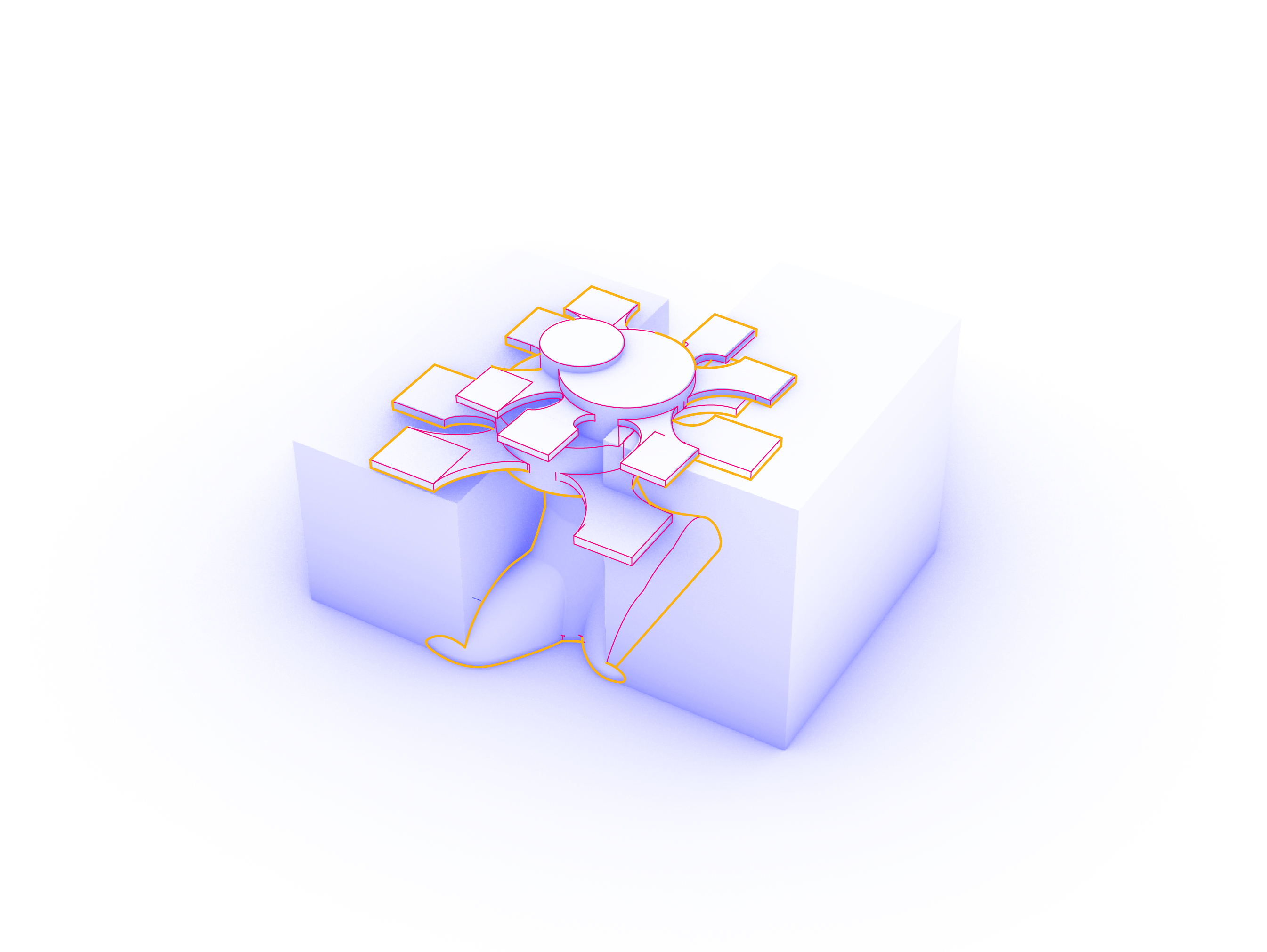
Cluster Exploration A
An exploration of combining the forms previously deduced in the formal intuitions exercise within interstitial spaces between rectilinear city blocks.
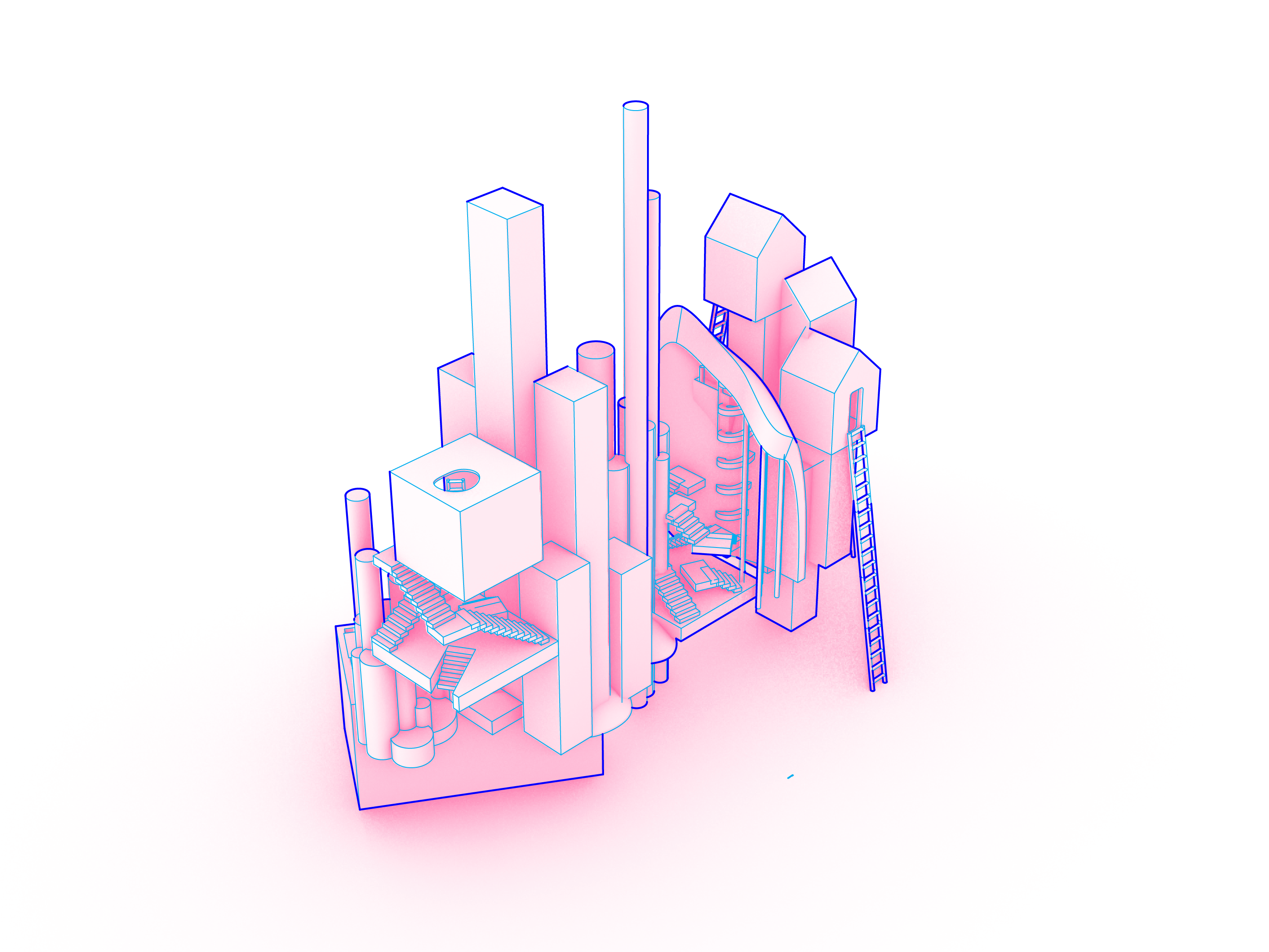
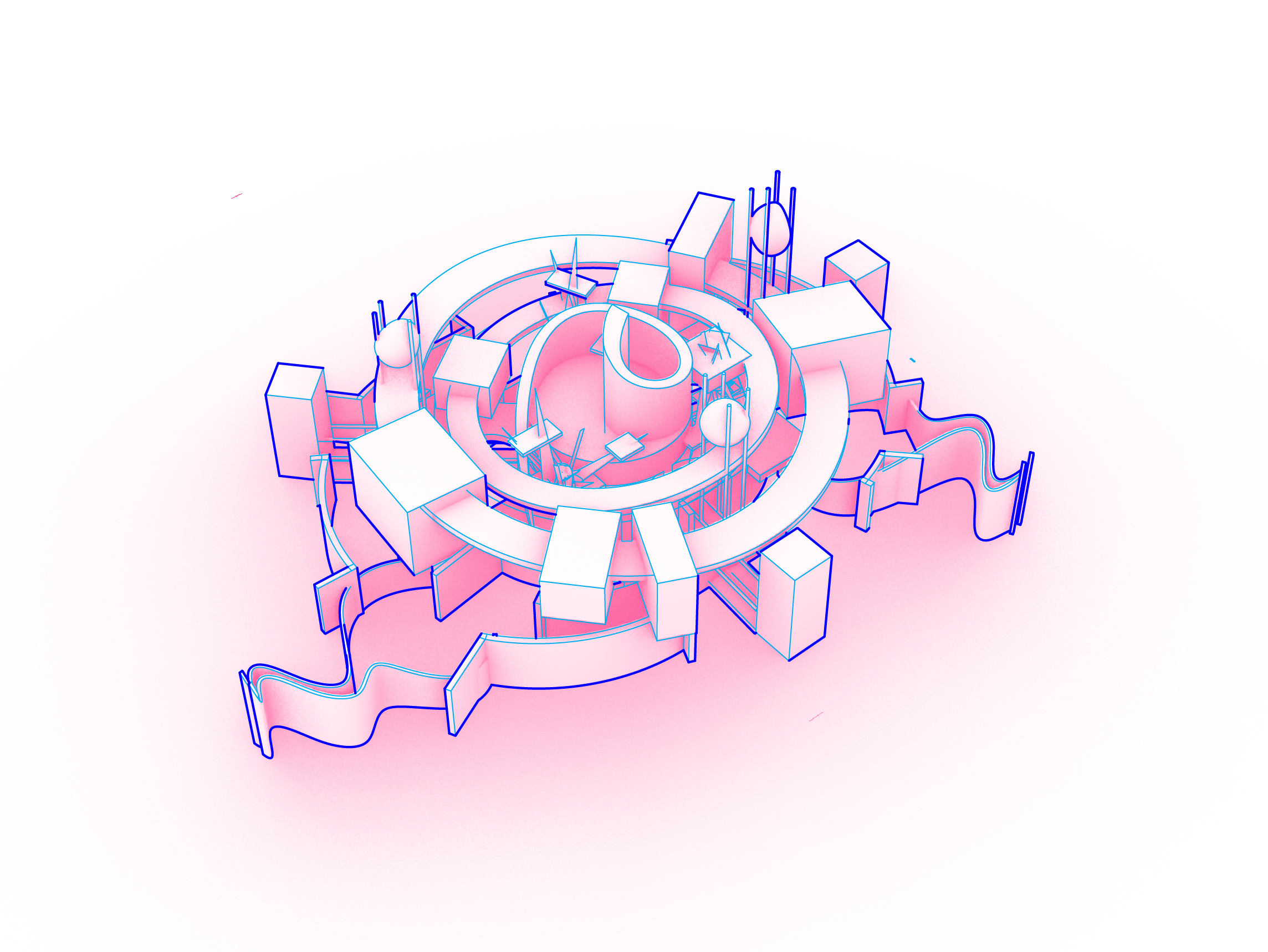
Cluster Exploration B
Combing the forms within each other that have similar dynamics and compositional functions.
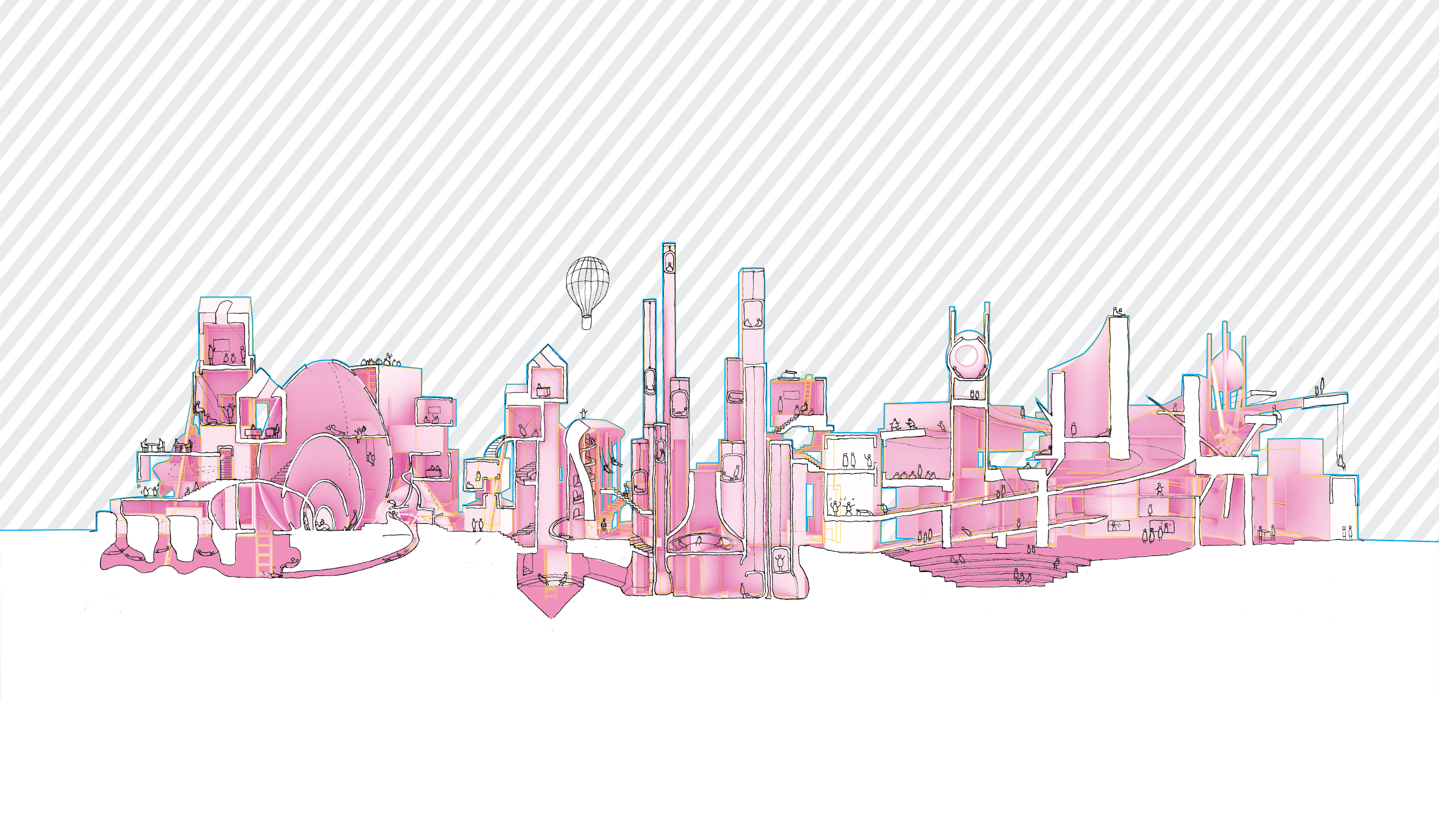
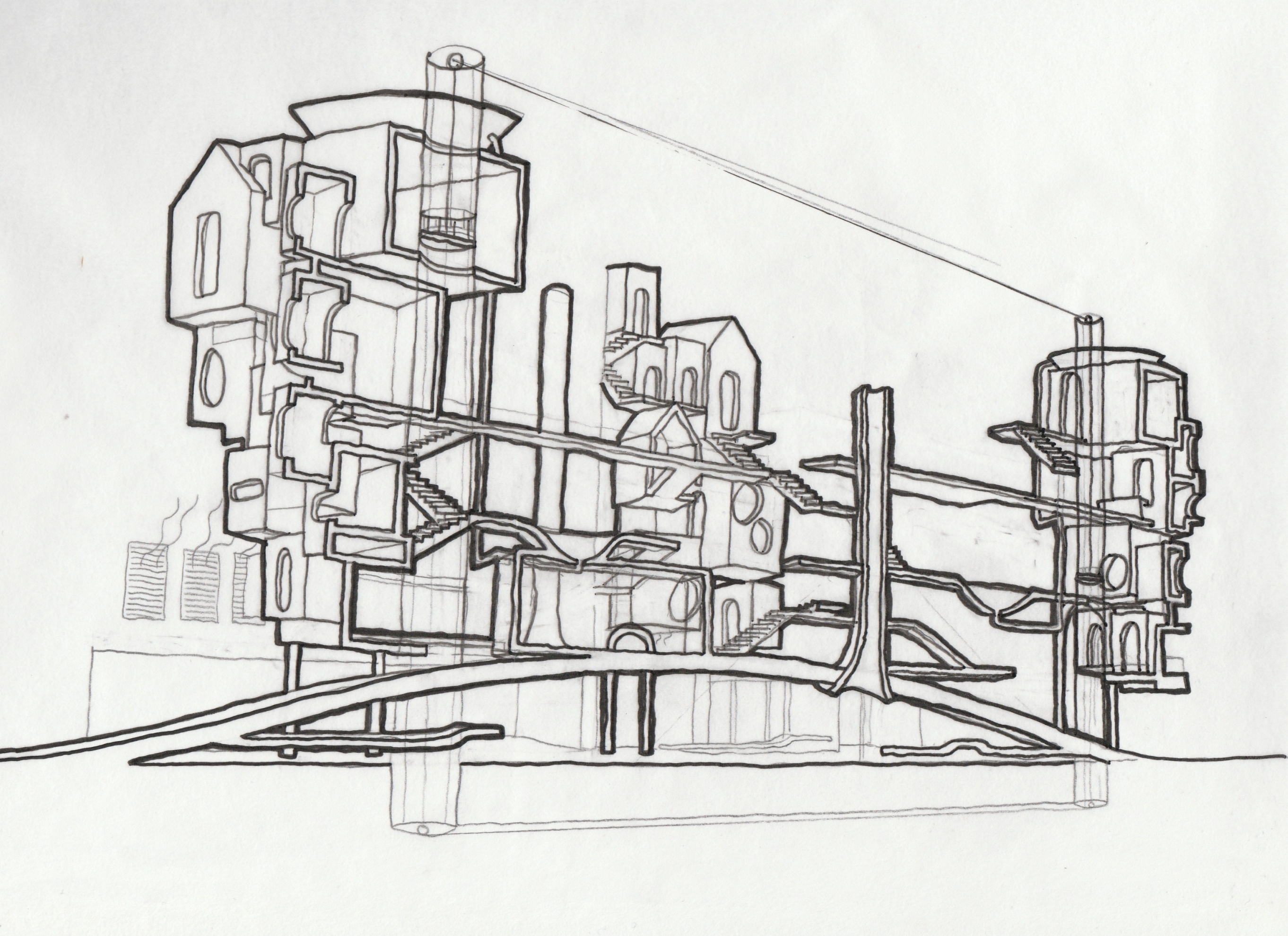
Section Studies
Two section explorations that combine the previous clusters and formal intuitions into one larger scheme. Created on trace paper with ink and Photoshop.
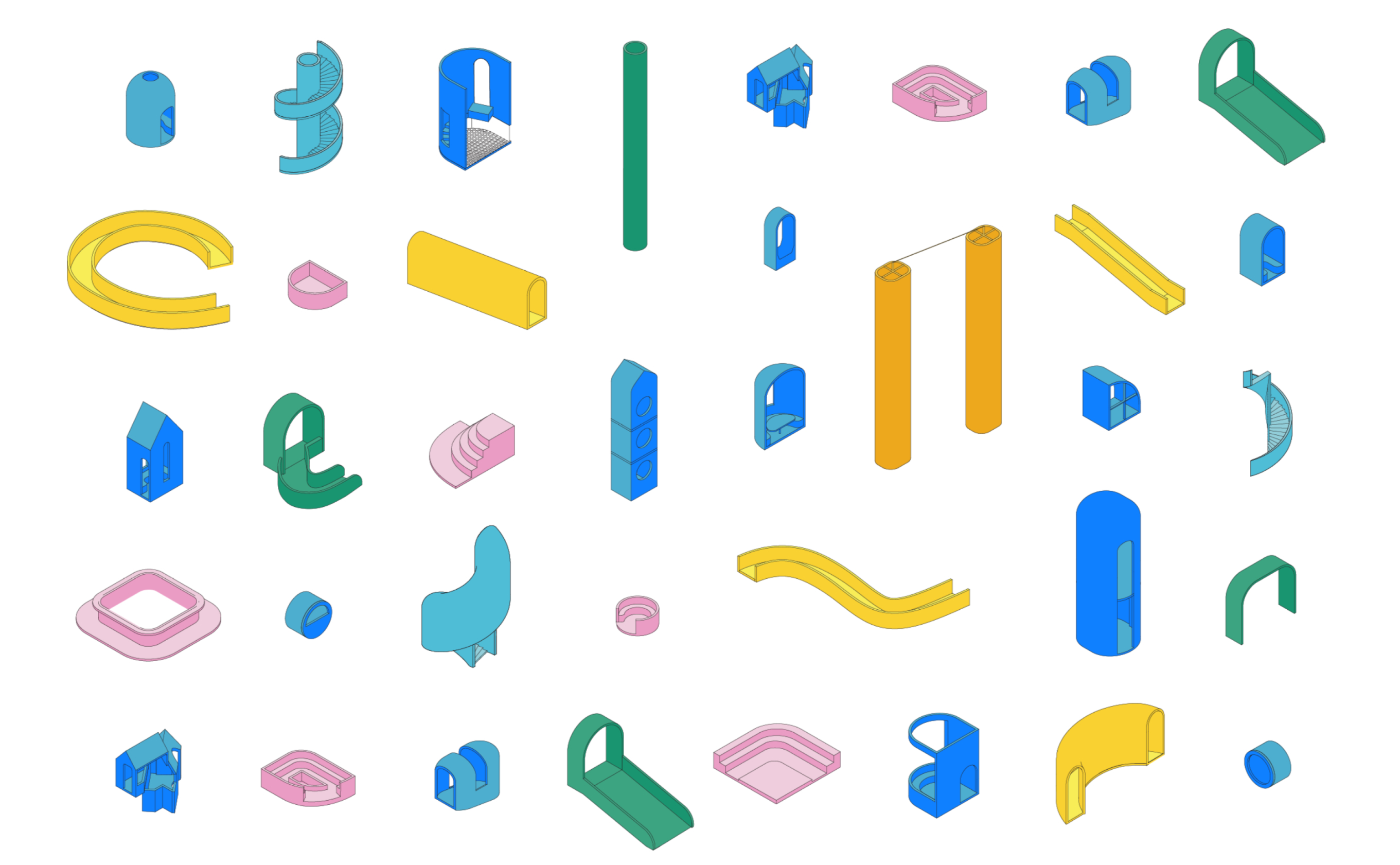
Finalized Catalog of Forms
The final catalog of the spatial moments that best invoke the desired sensations, features, and intuitions. Each spatial moment is divided into one the following categories: private moments (dark blue), communal moments (pink), ramps (yellow), stairs (light blue), elevators (orange), and entries (green).
3. Design Proposal
Final Kit of Parts
A final kit of programs that can be chosen from and placed in any order within any interstitial space to create the park. Final design was based on incorporating the necessary physical attributes, concept attributes, and formal intuitions. Numbers are based on desired design features listed earlier.
Sound Buffer
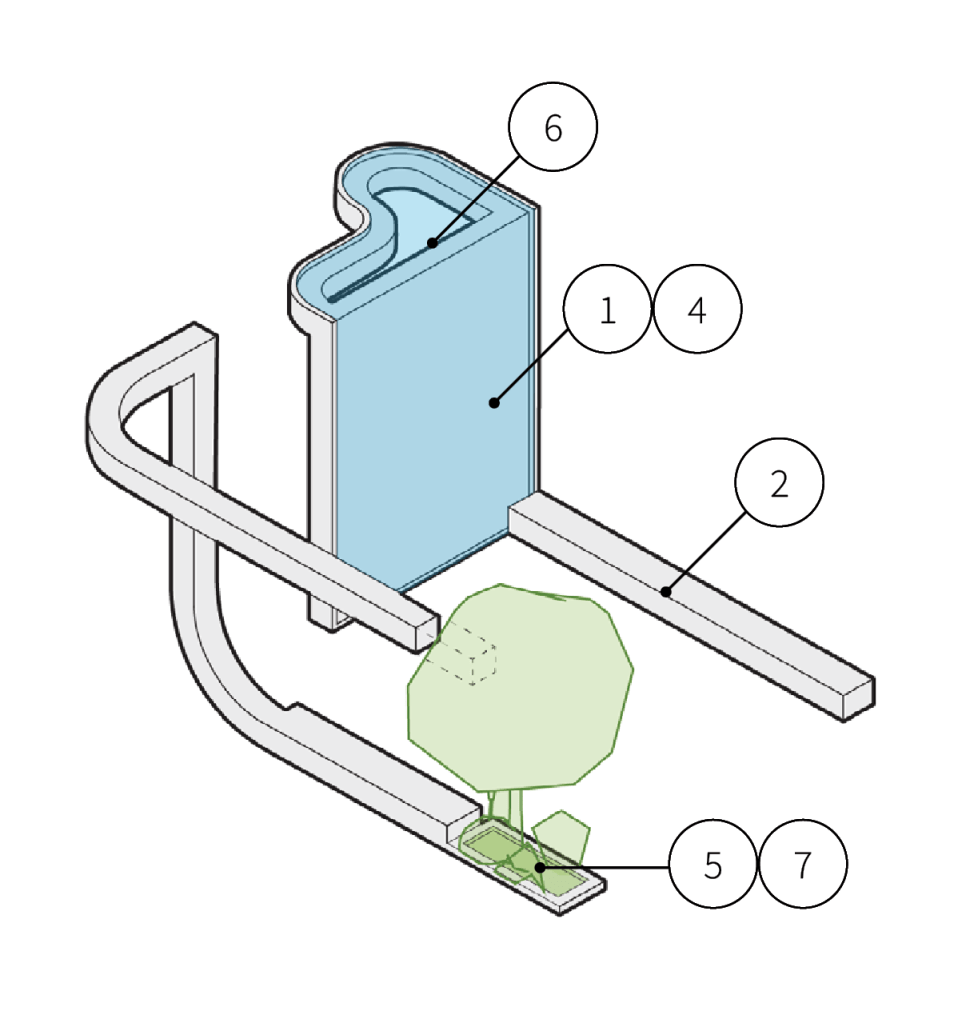
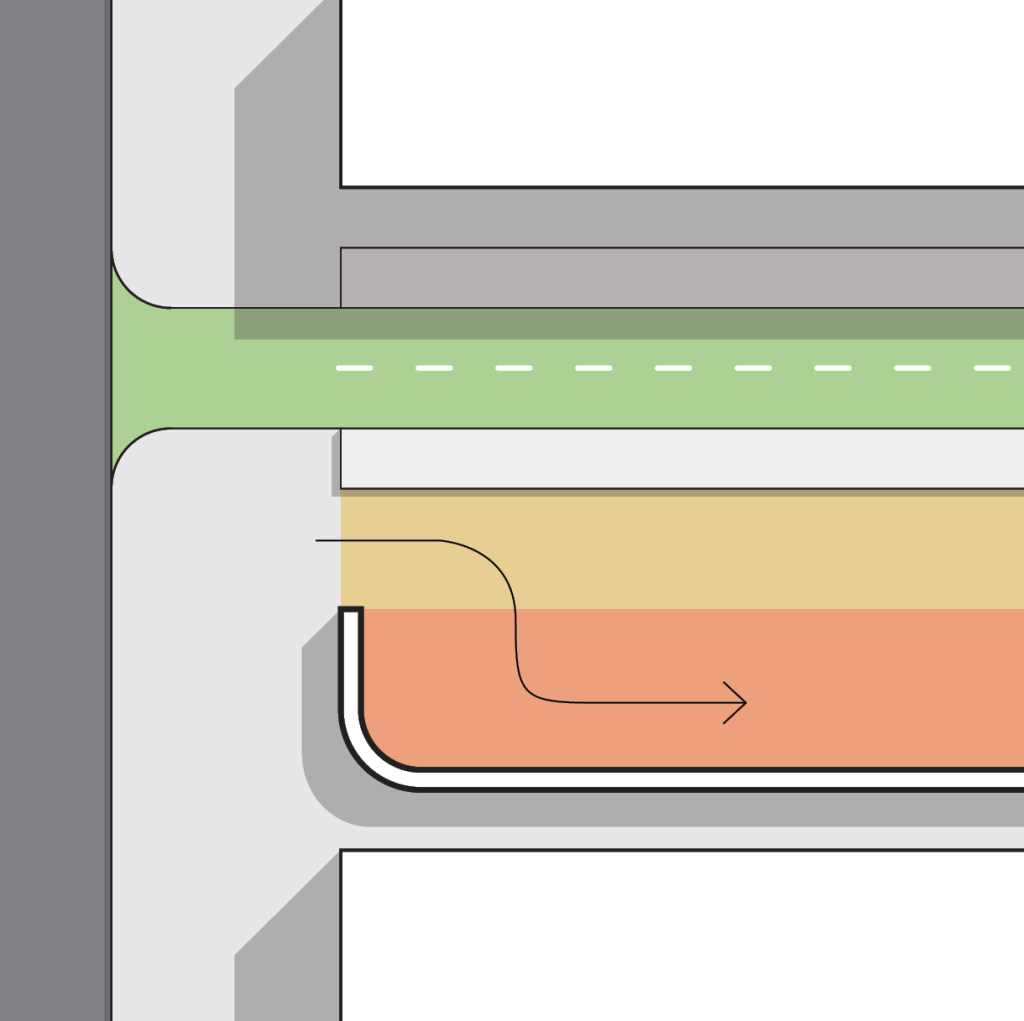
Gallery
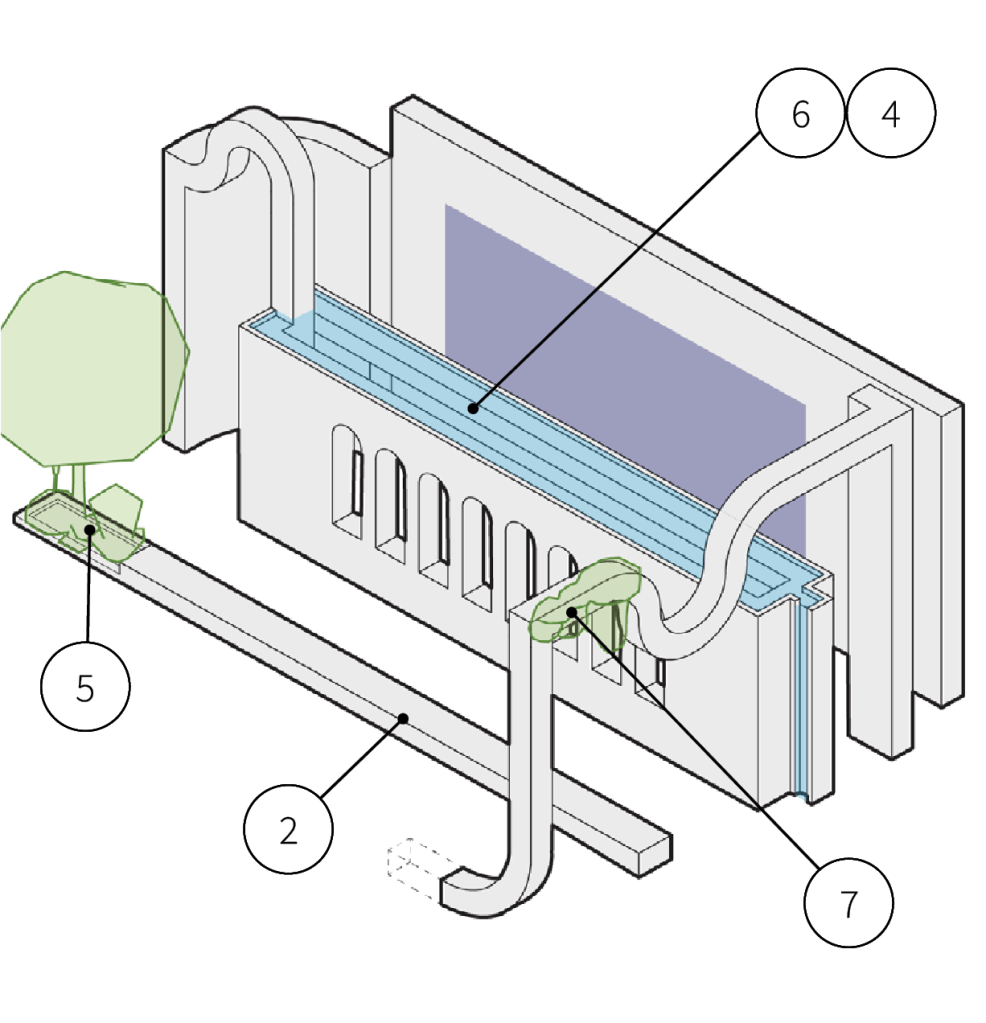
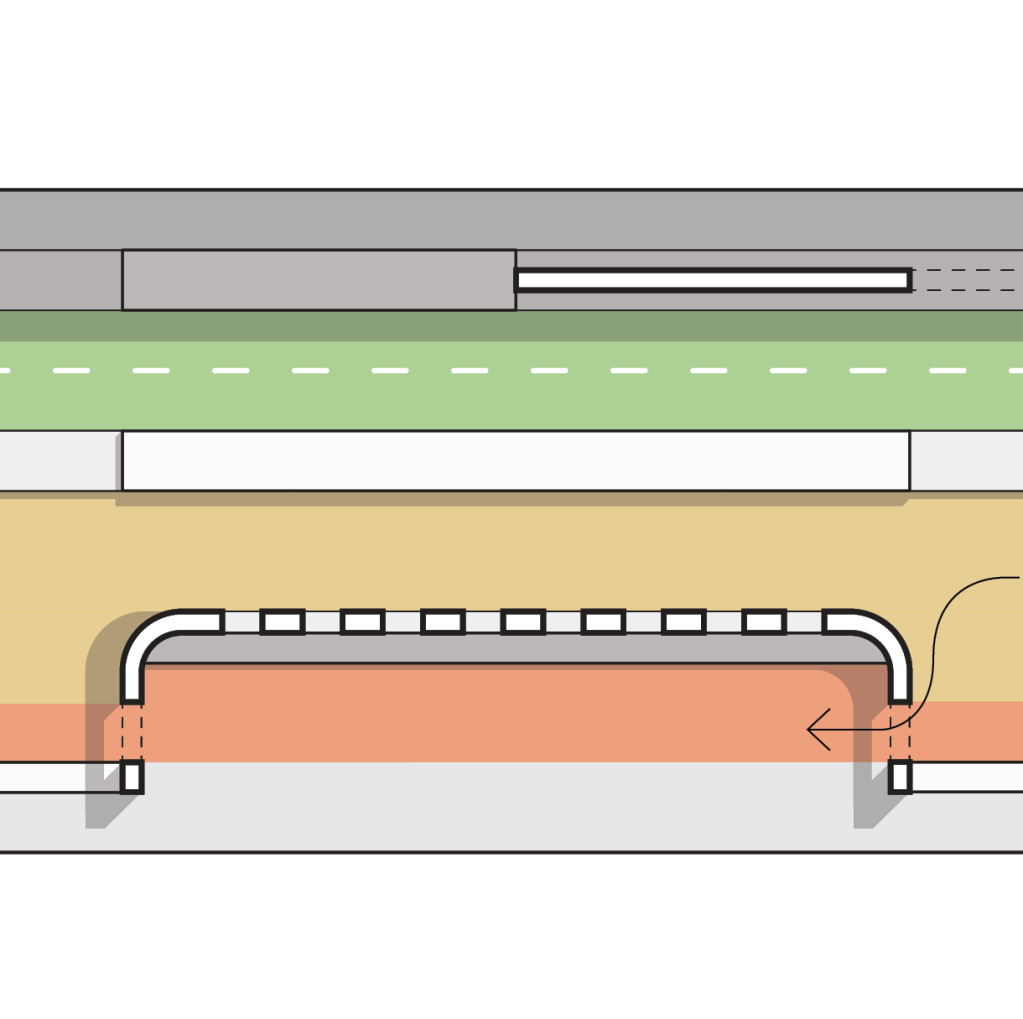
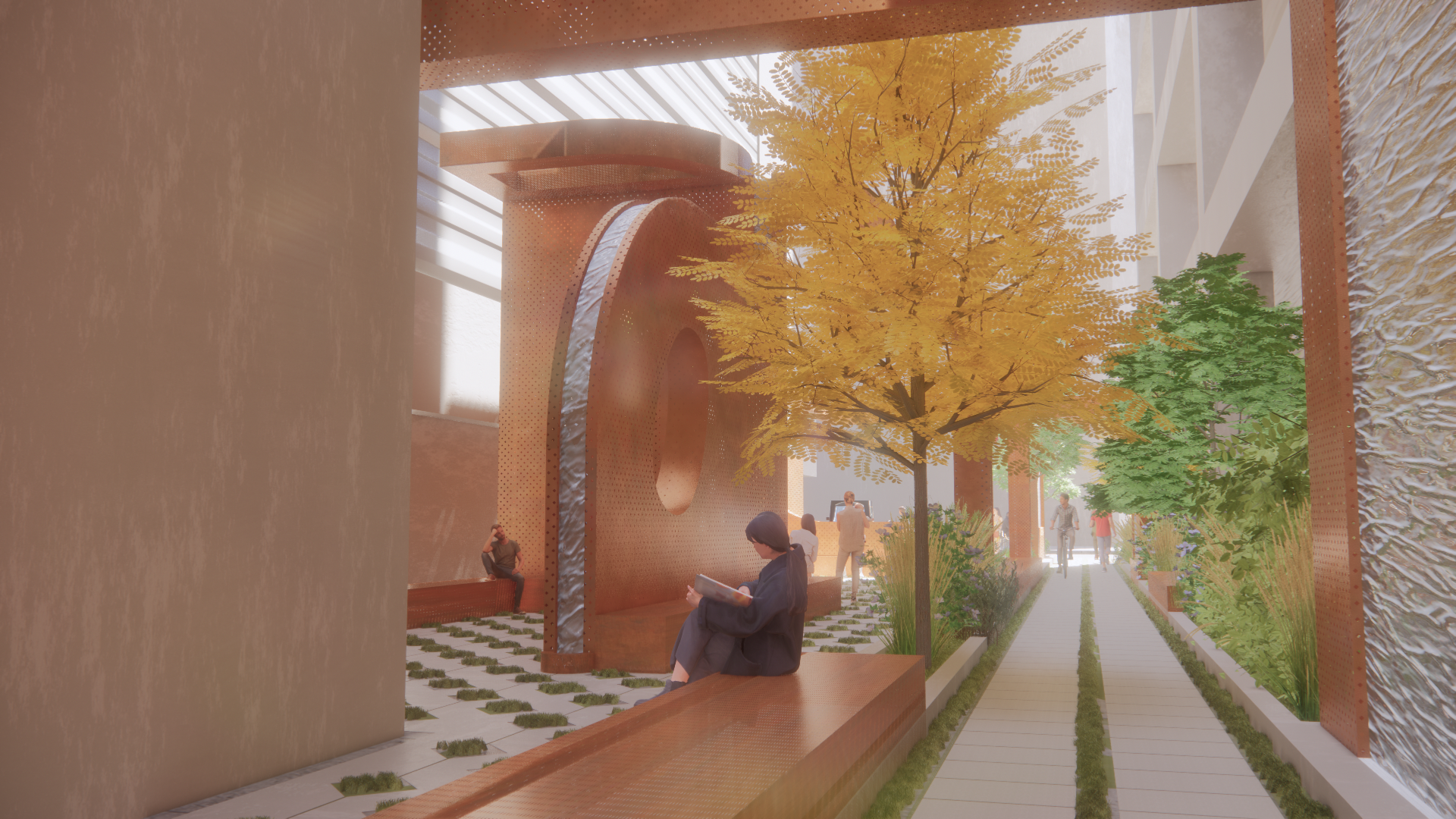
Nooks
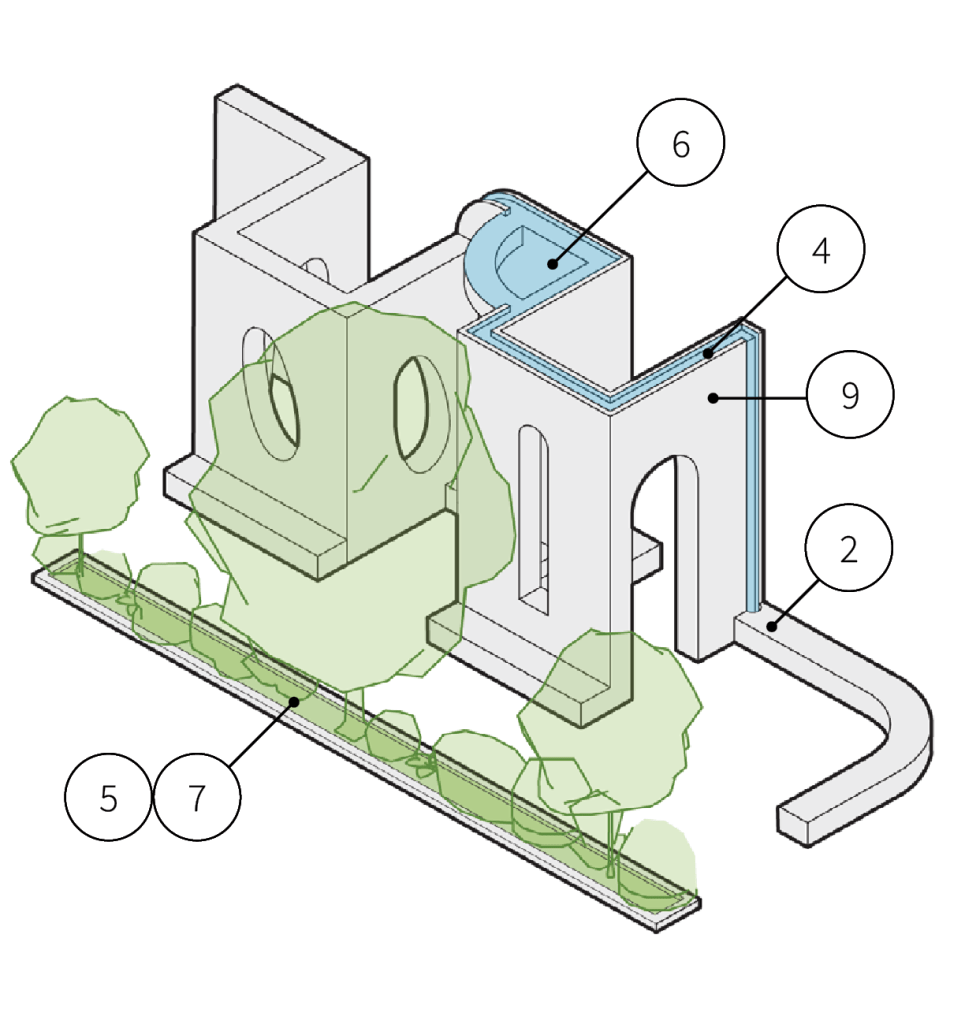
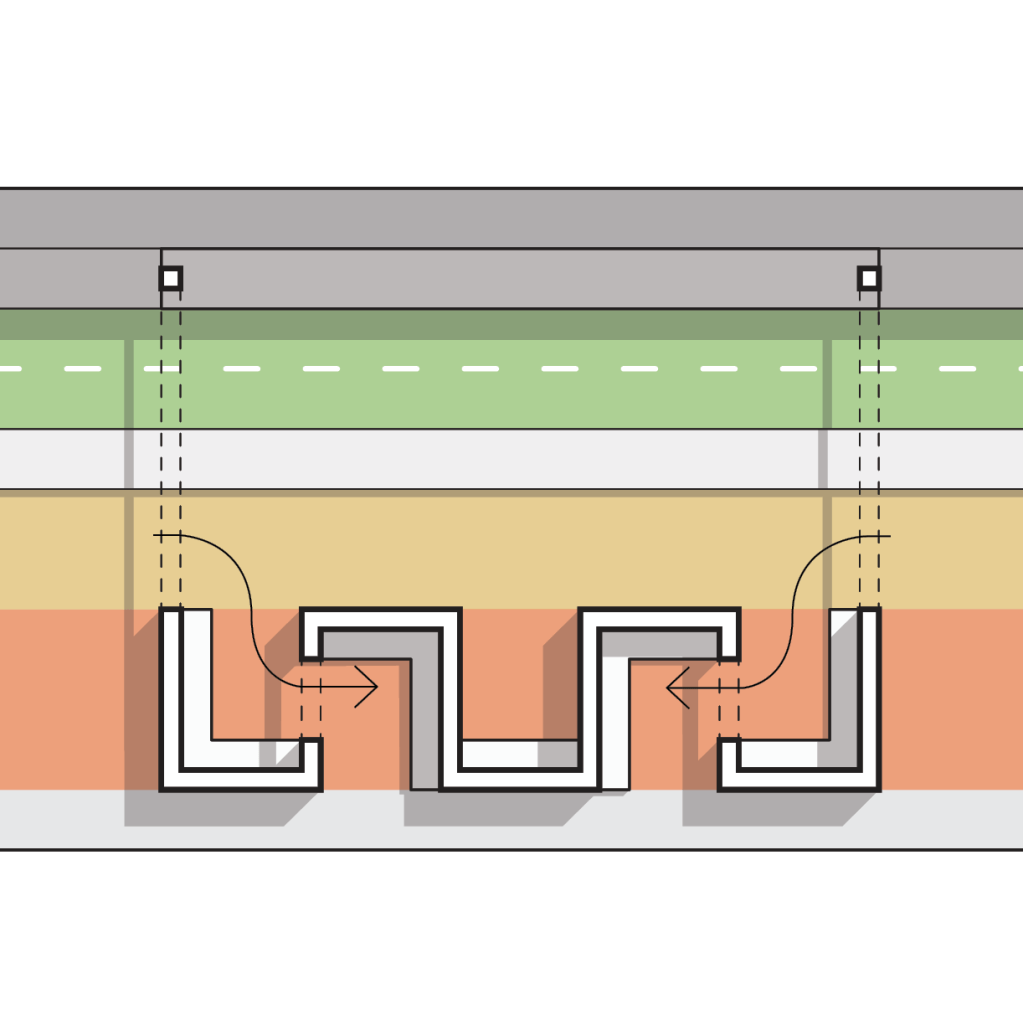
Antichamber
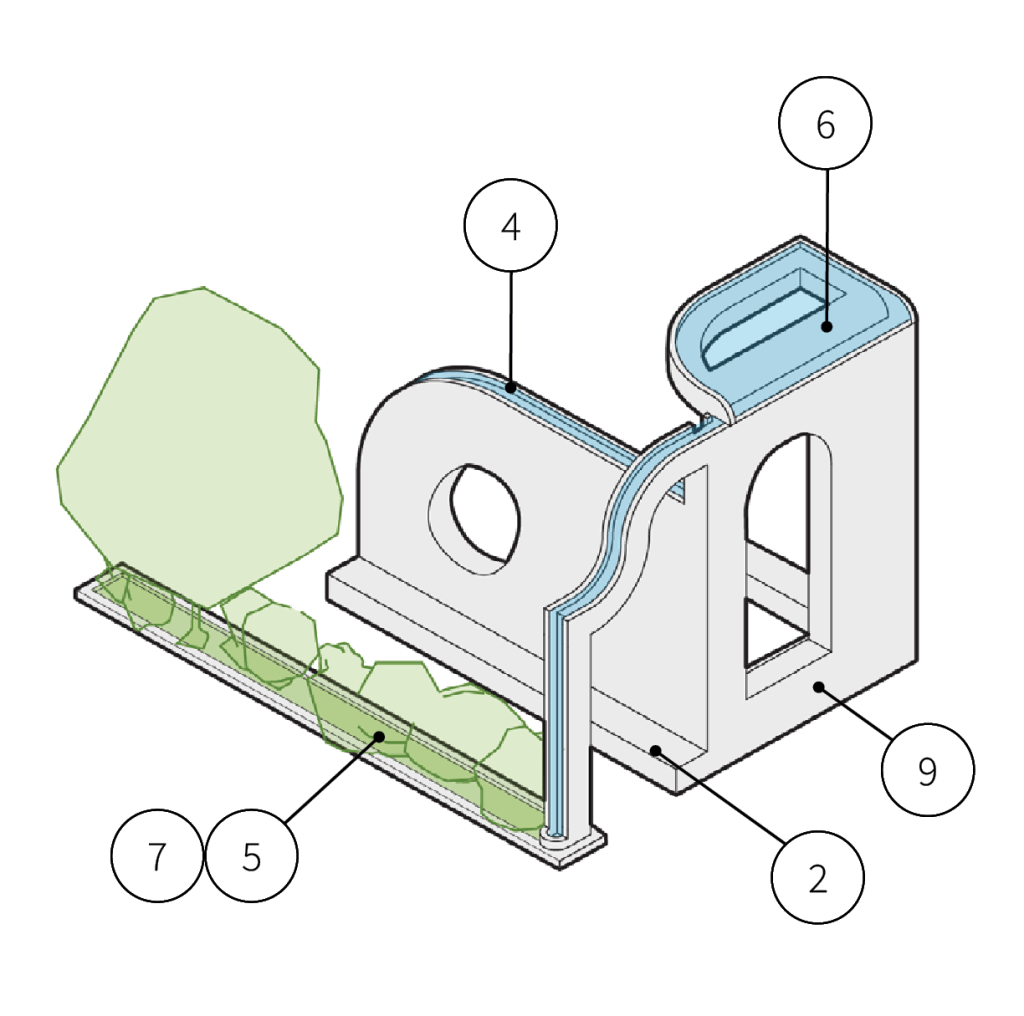
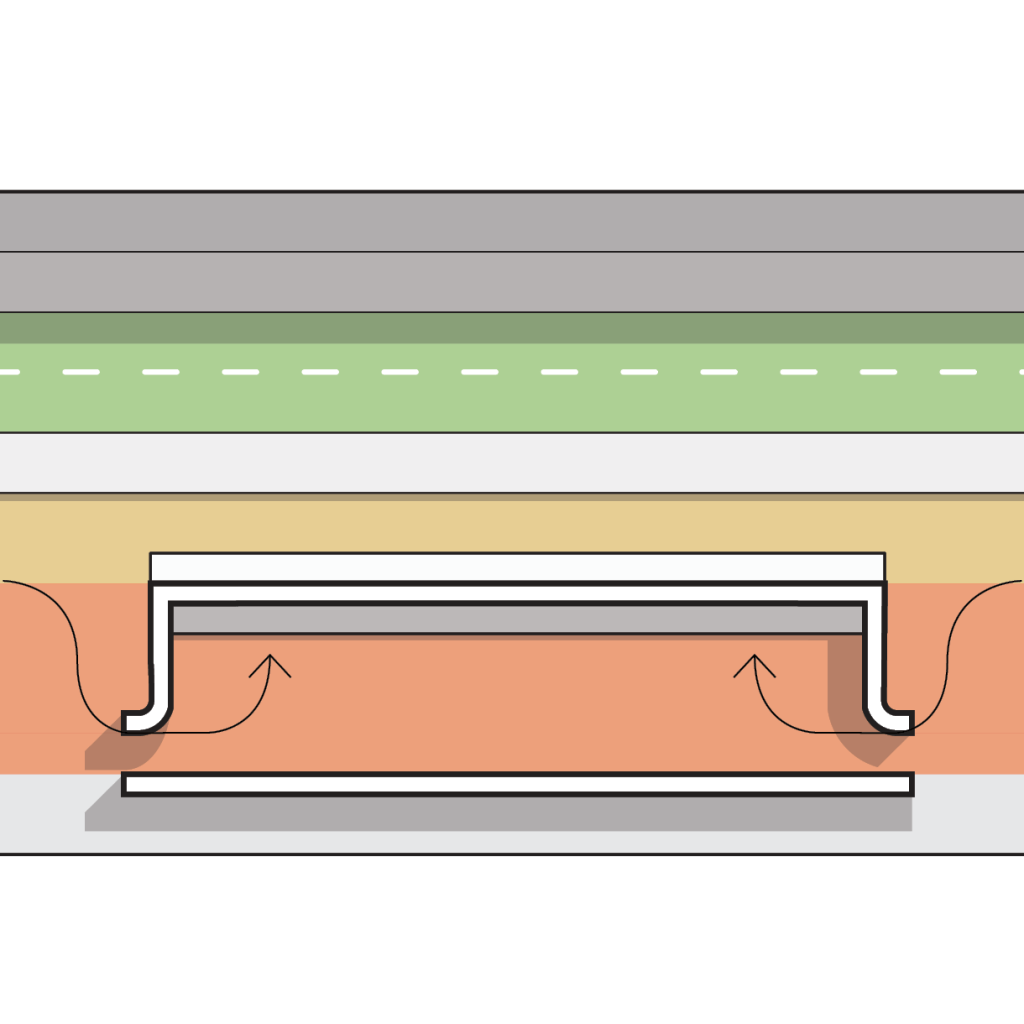
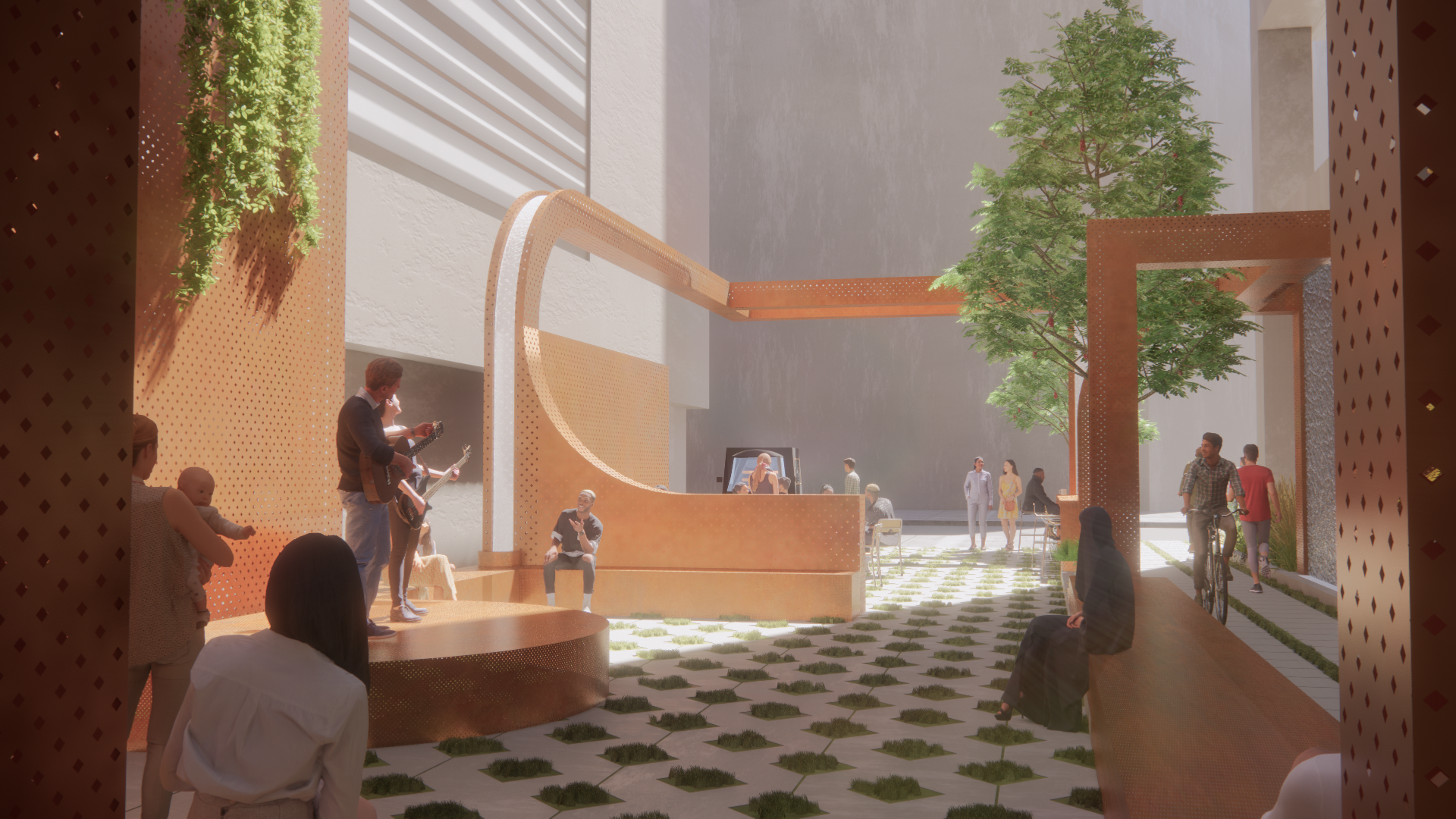
Stage
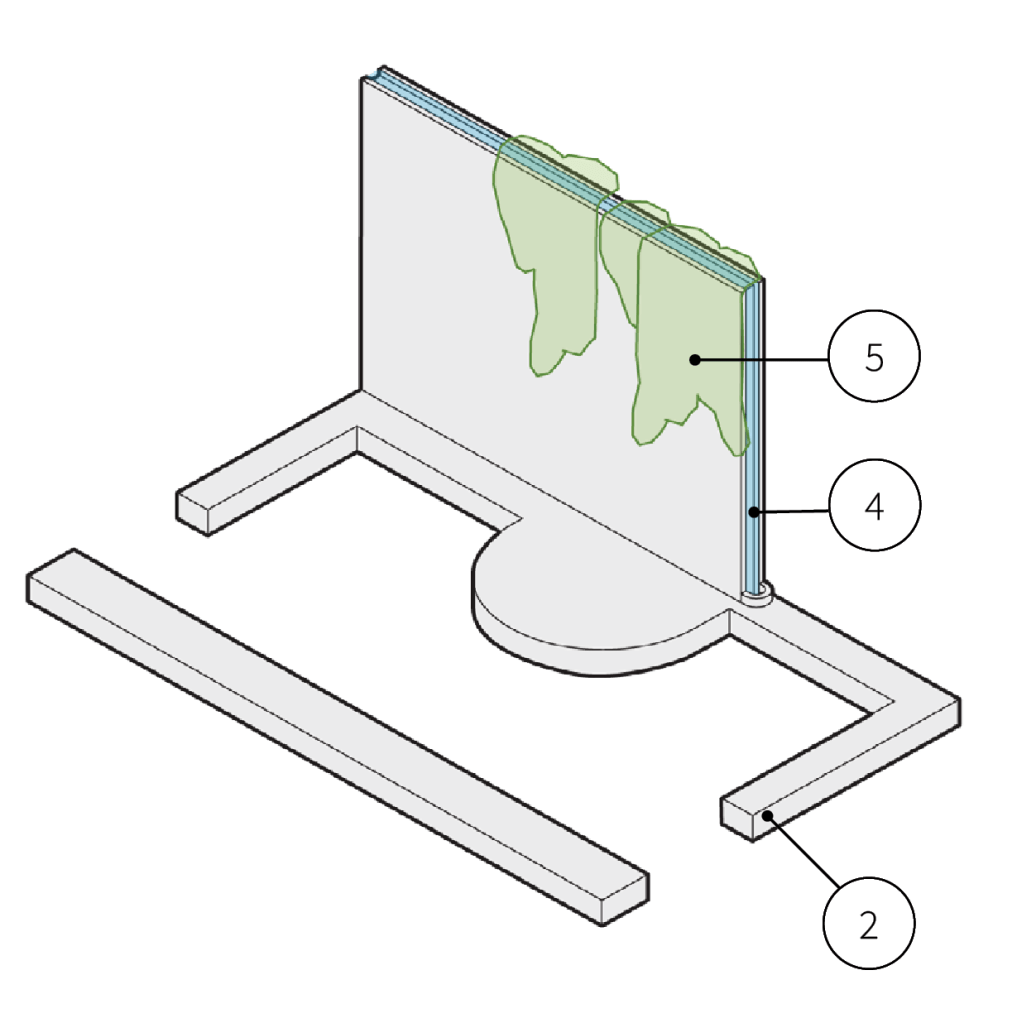
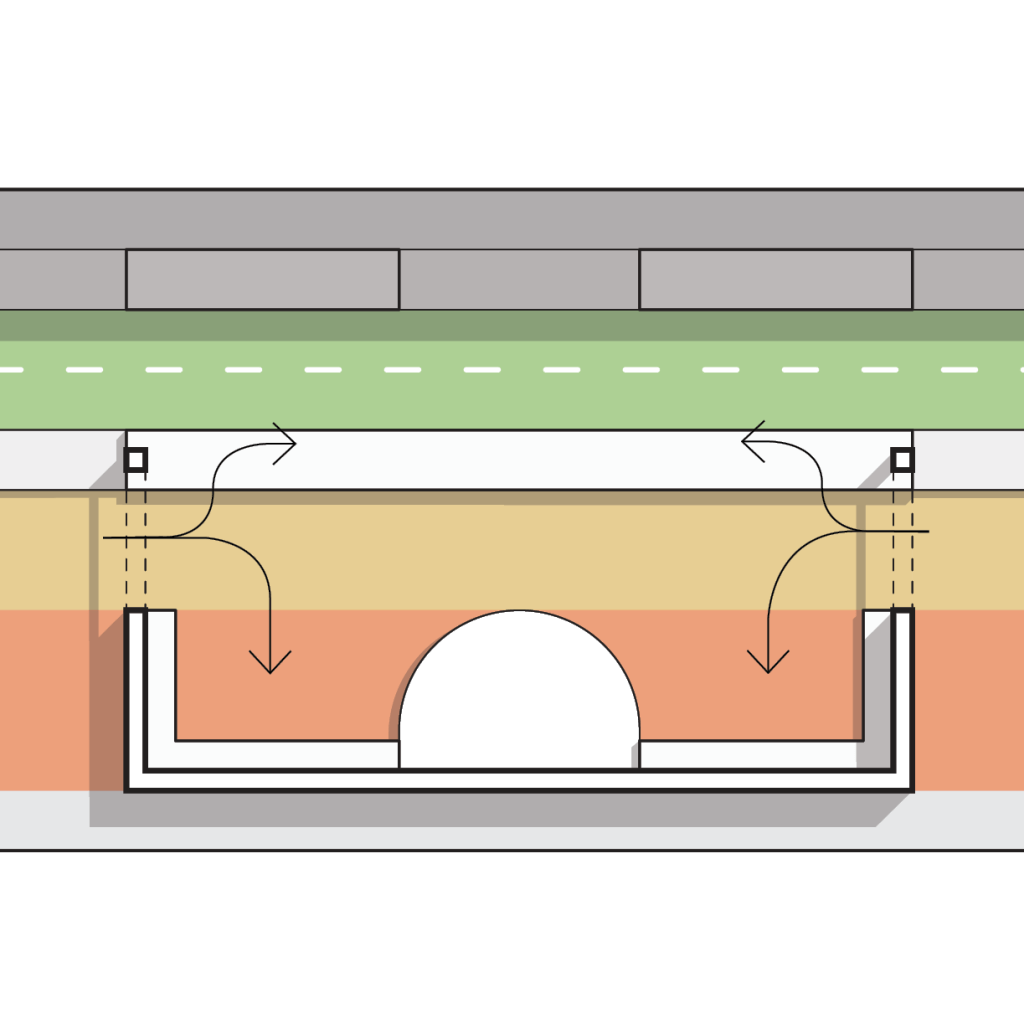
Food Truck
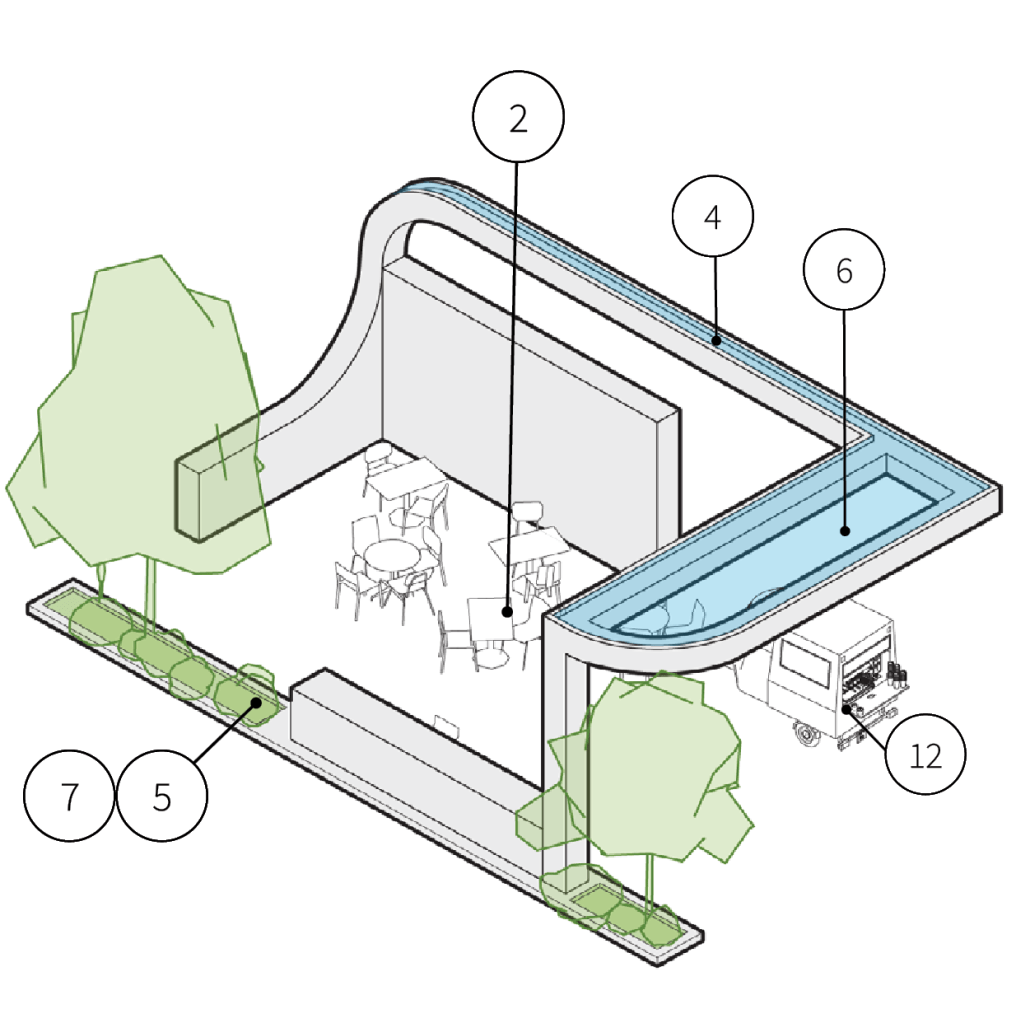
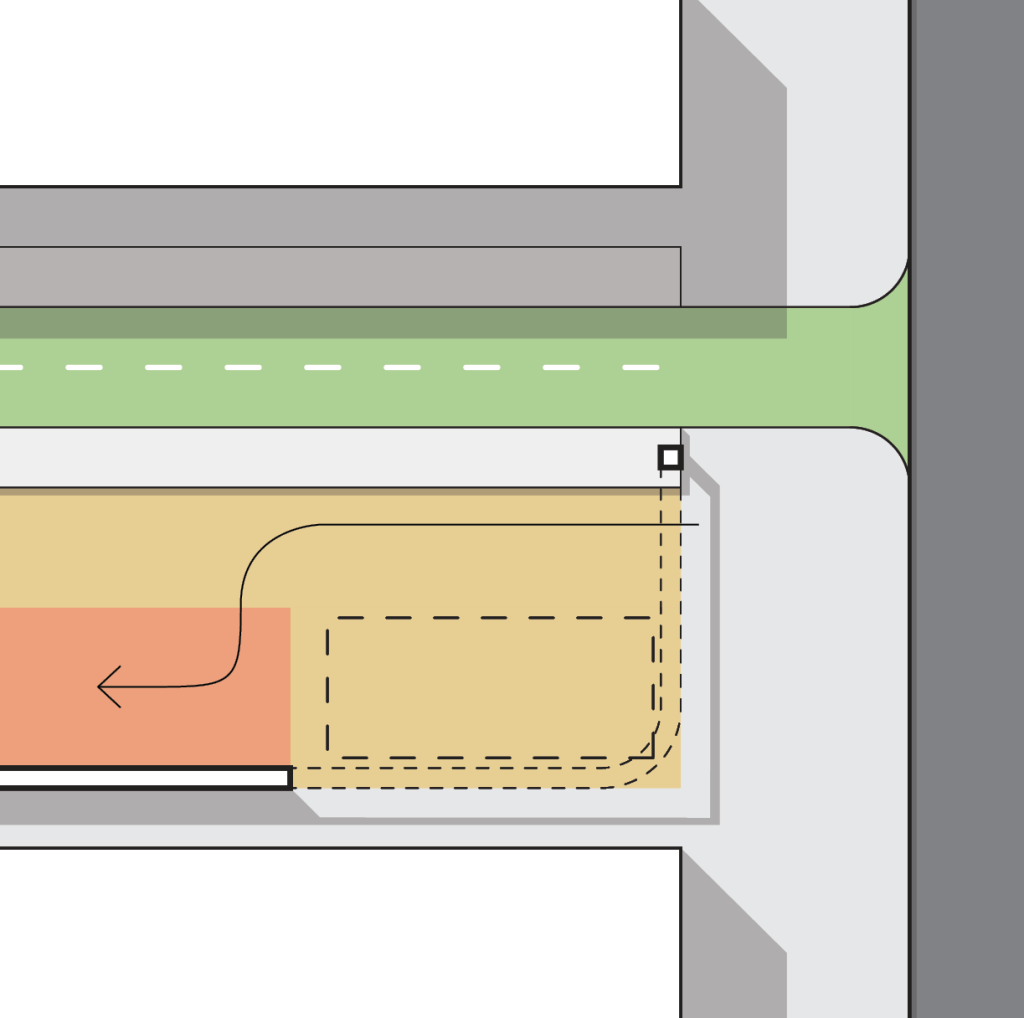
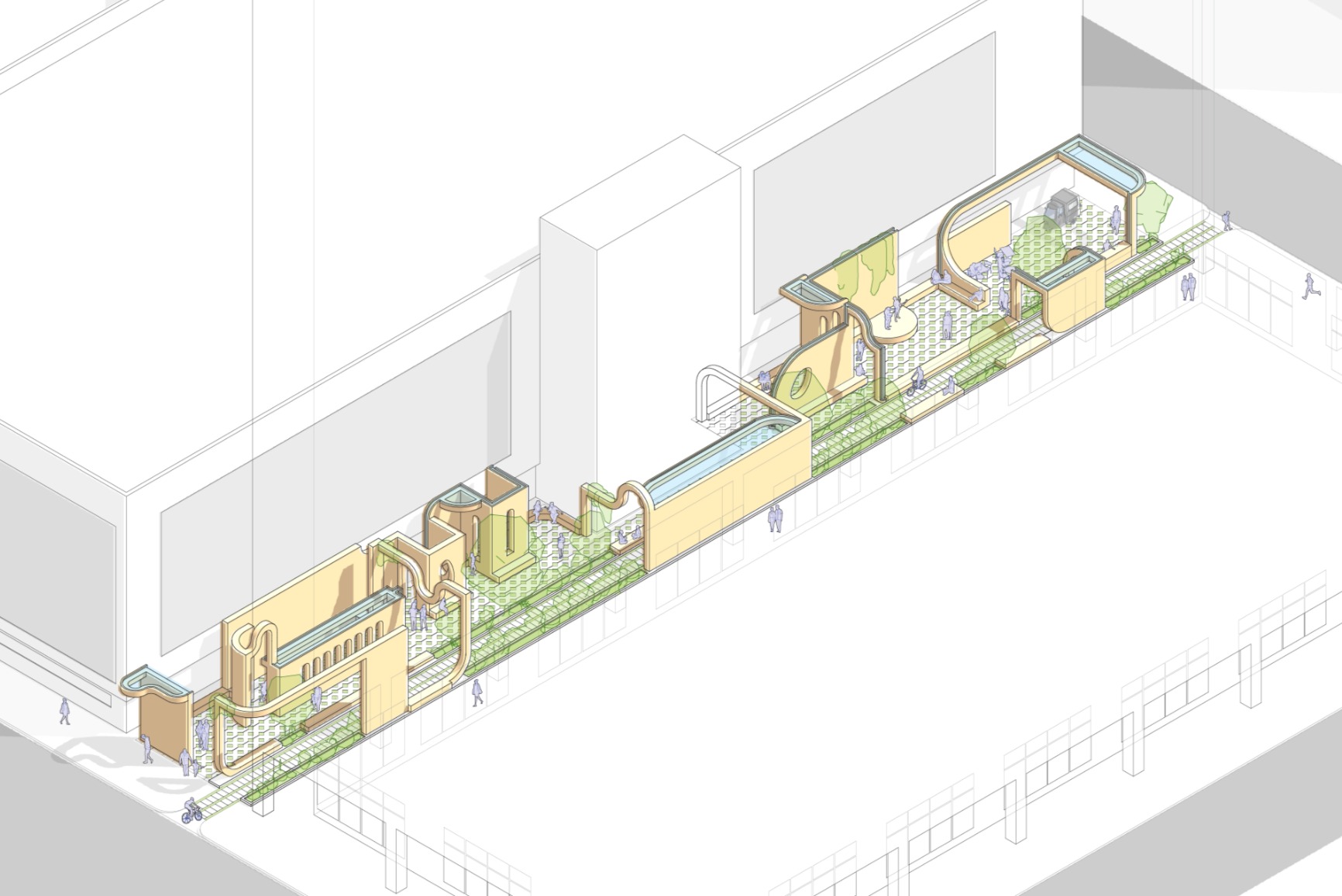
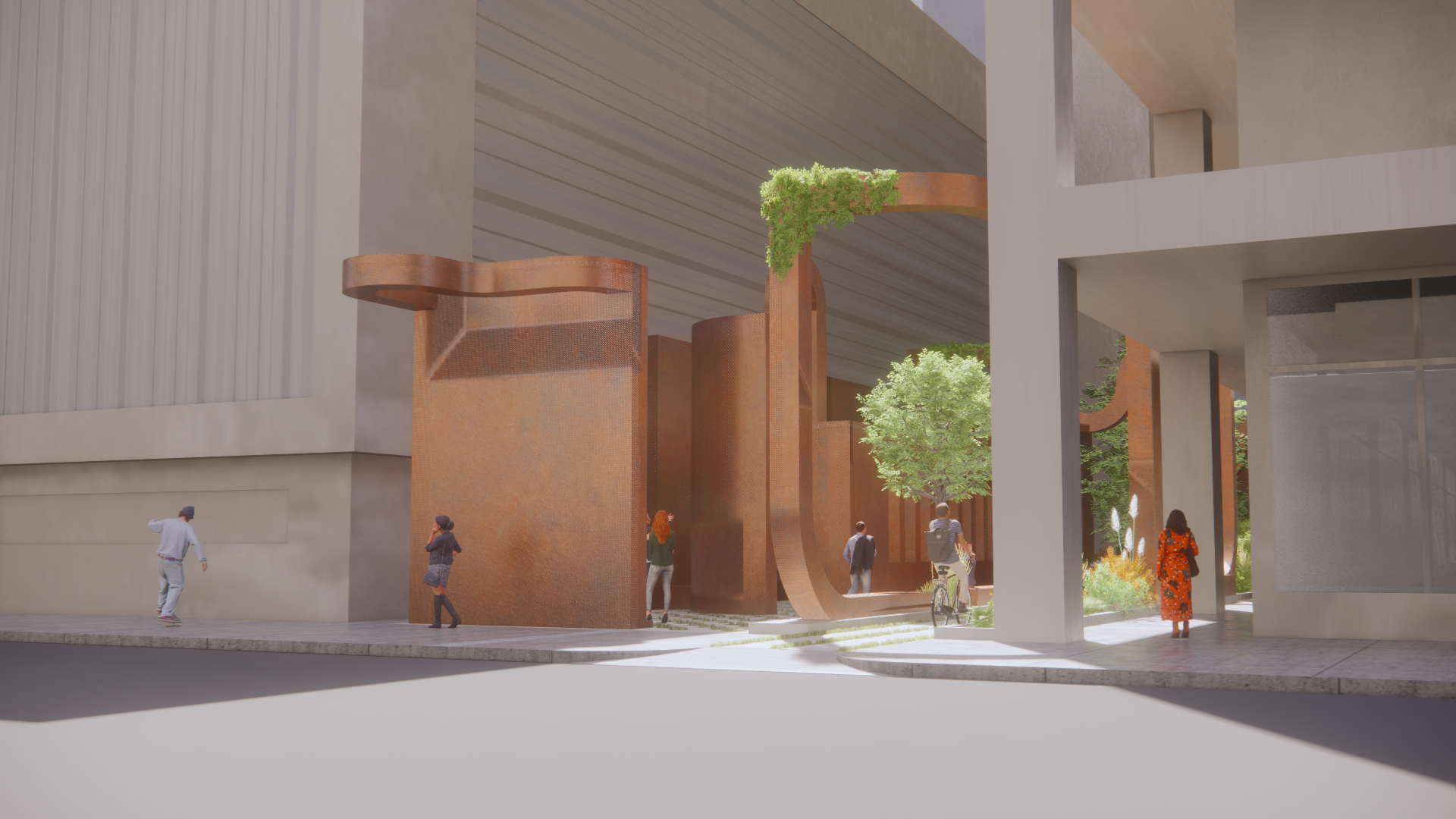
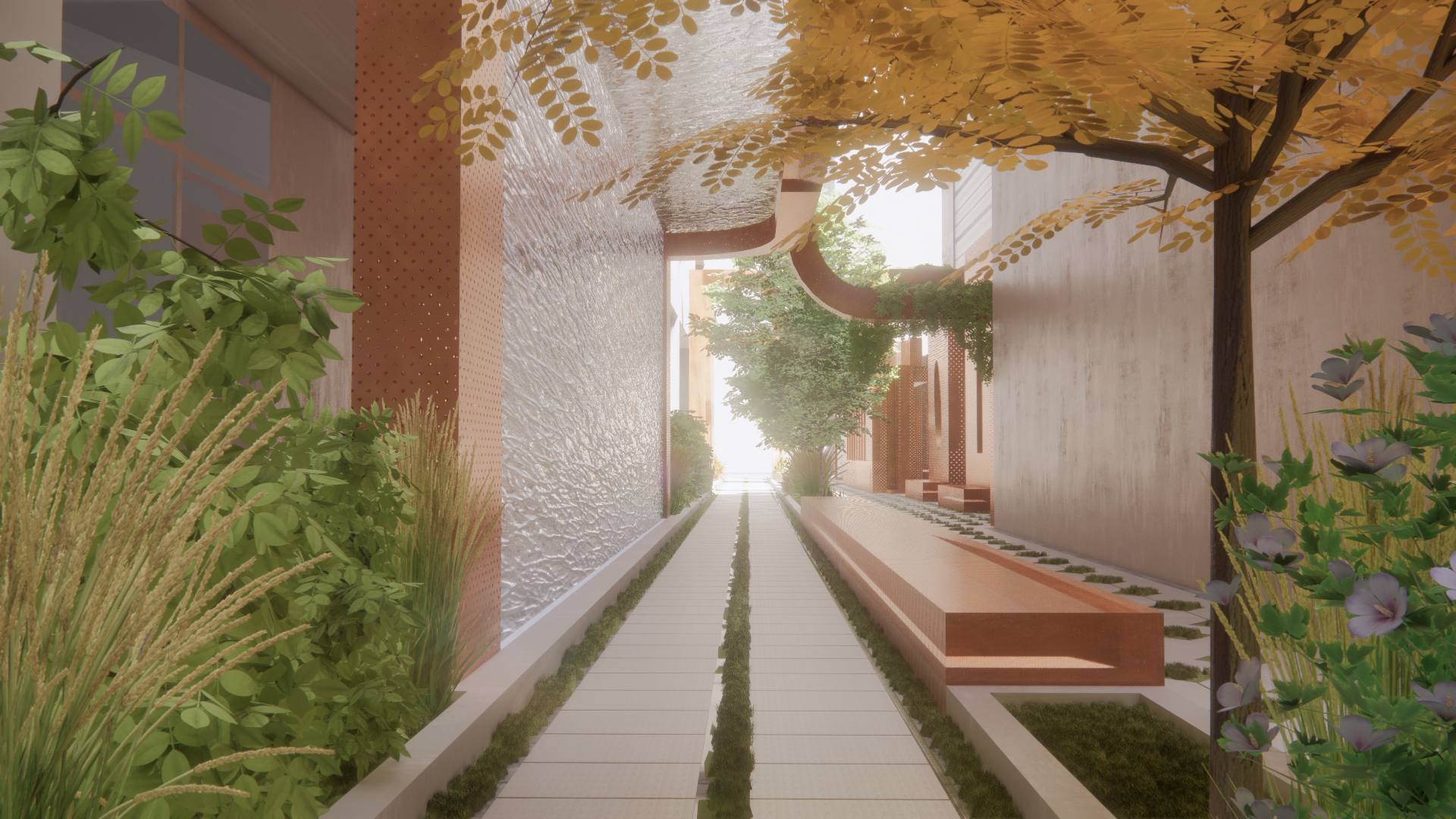
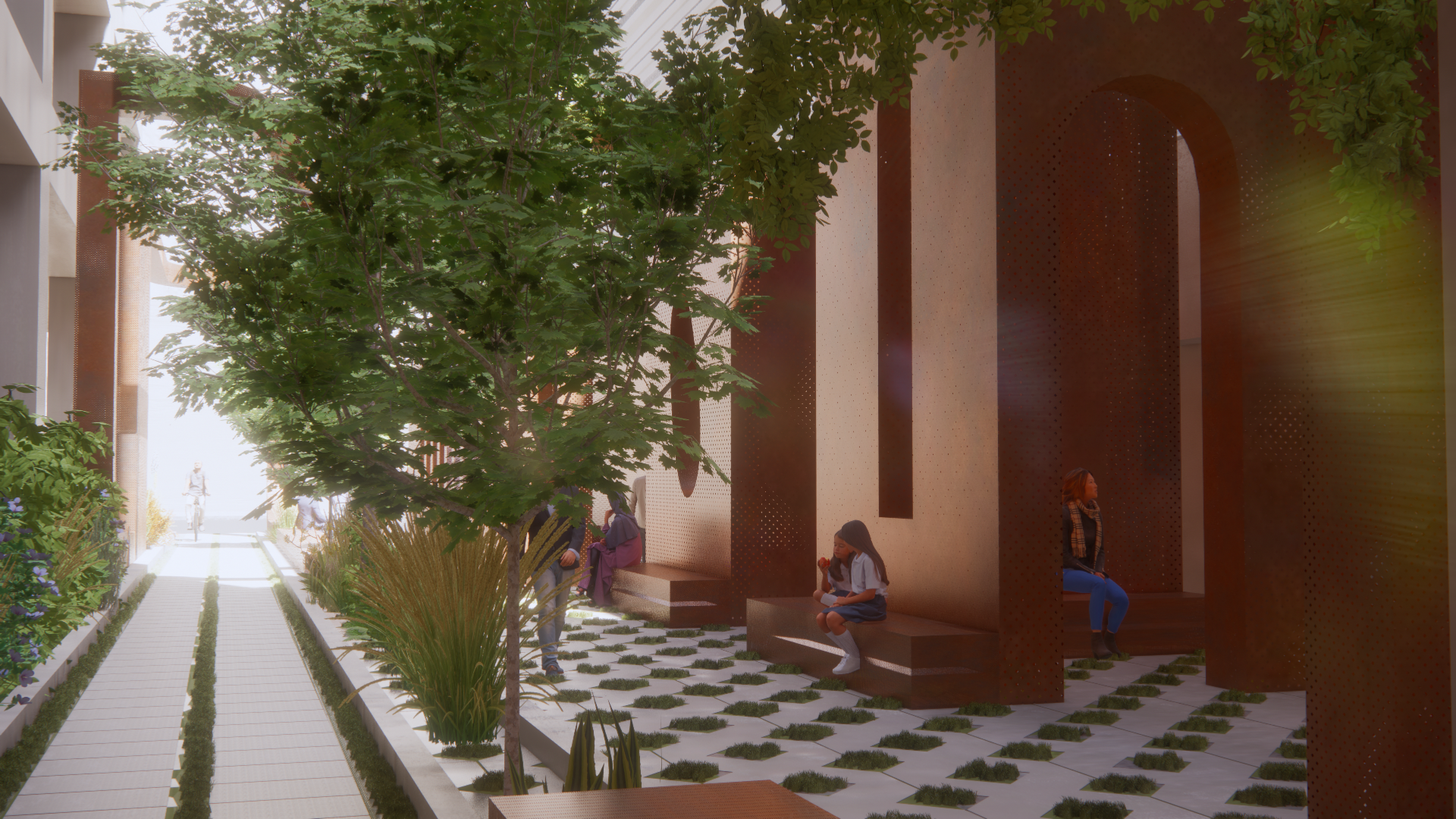
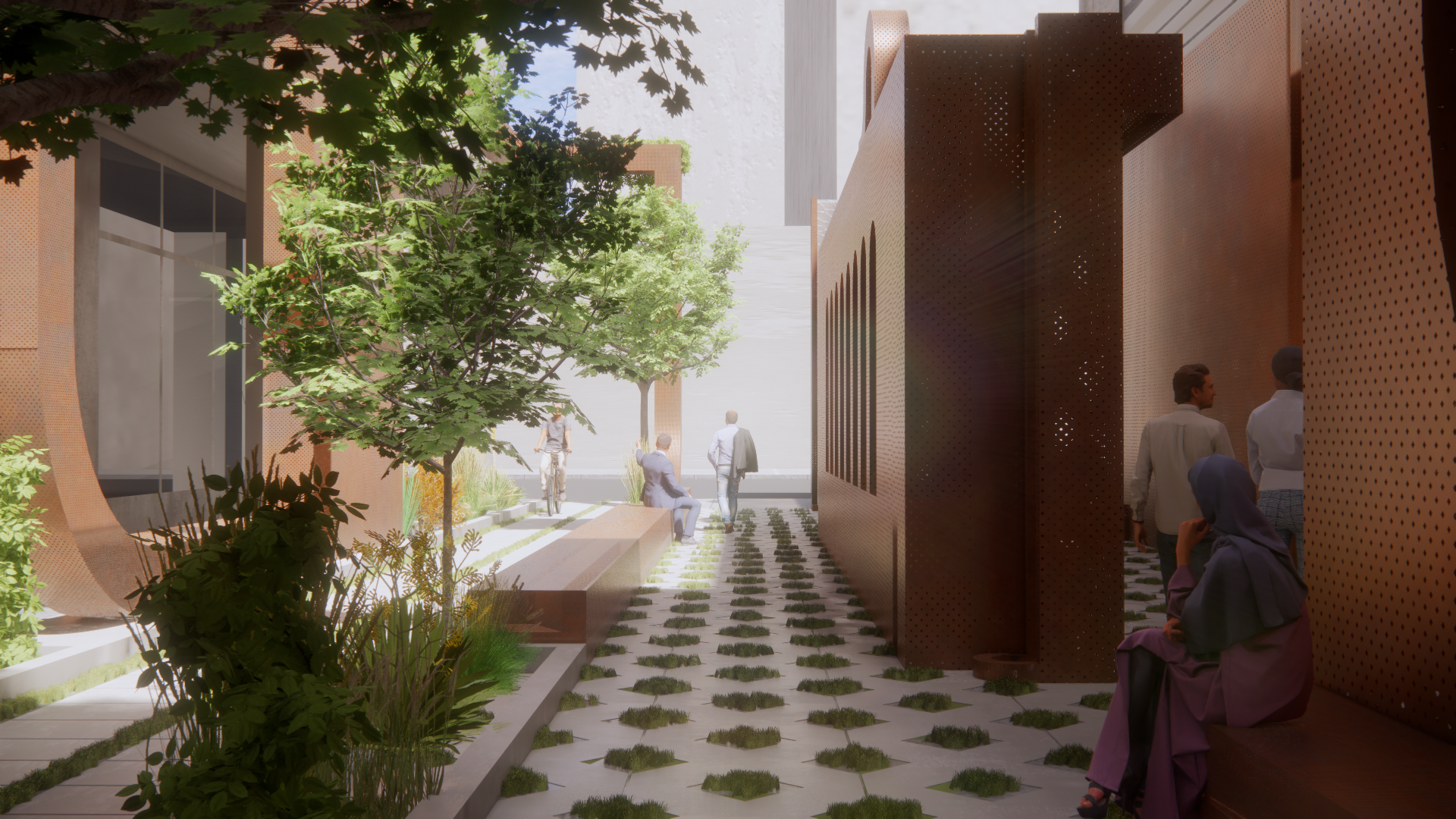
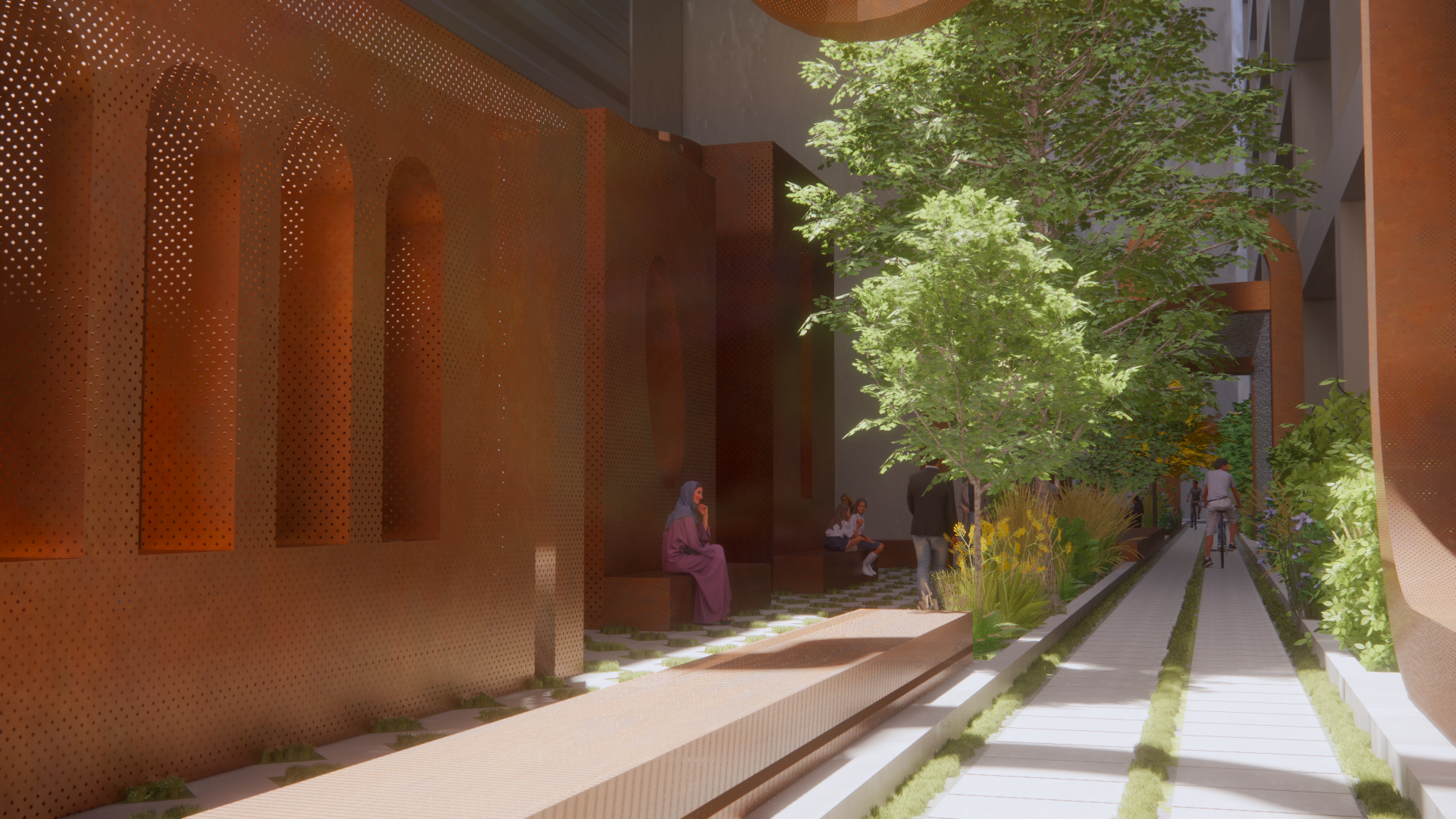
Final Design
A isometric drawing of the thesis exploration showing a day in the life of the alleyway park. The chosen order of the individual programs for this specific alleyway in Houston is represented. Rendered in Rhino 3D and Photoshop.
 Ali Harwood Design